

What is SSV Network (SSV)? A Complete Guide to Ethereum's Distributed Validator Protocol
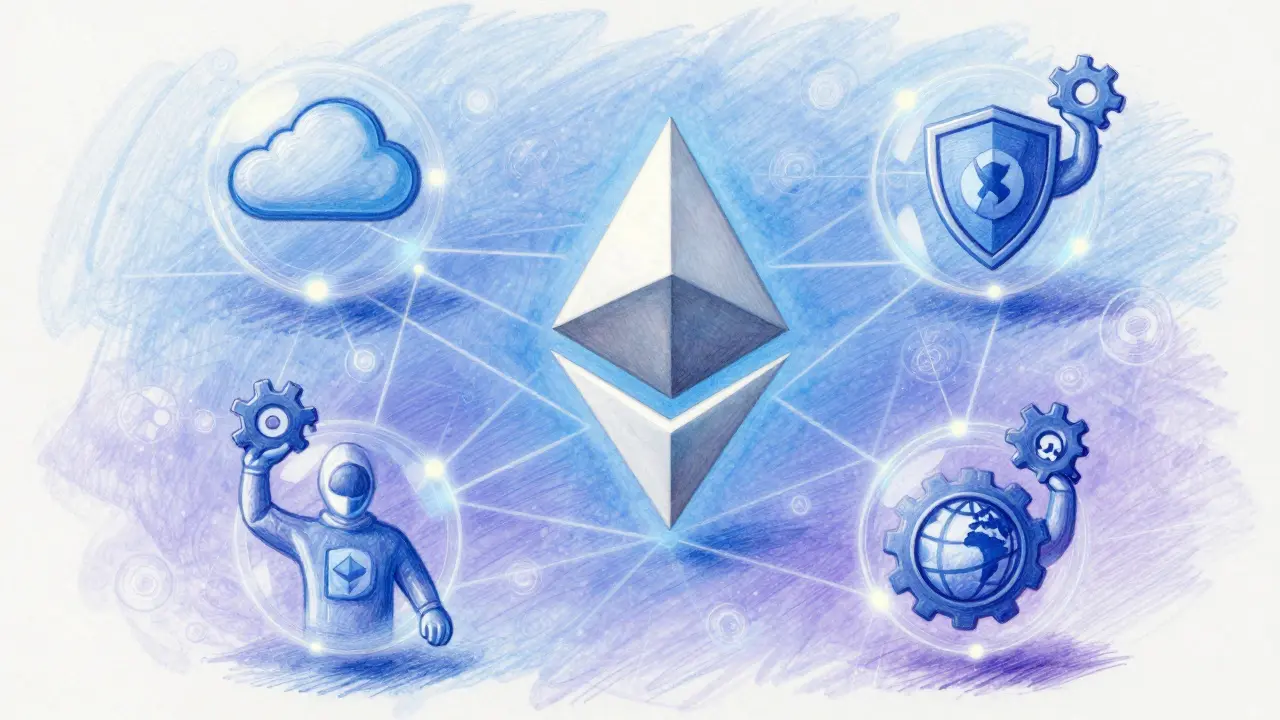
SSV Network isn't a traditional cryptocurrency coin-it's a protocol built on Ethereum that's changing how staking works. Launched in February 2024, SSV Network uses Distributed Validator Technology (DVT) to split validator duties across multiple node operators, making Ethereum staking more secure and decentralized. This means your staked ETH is protected even if one node fails, which isn't possible with typical staking setups.
How SSV Network Works
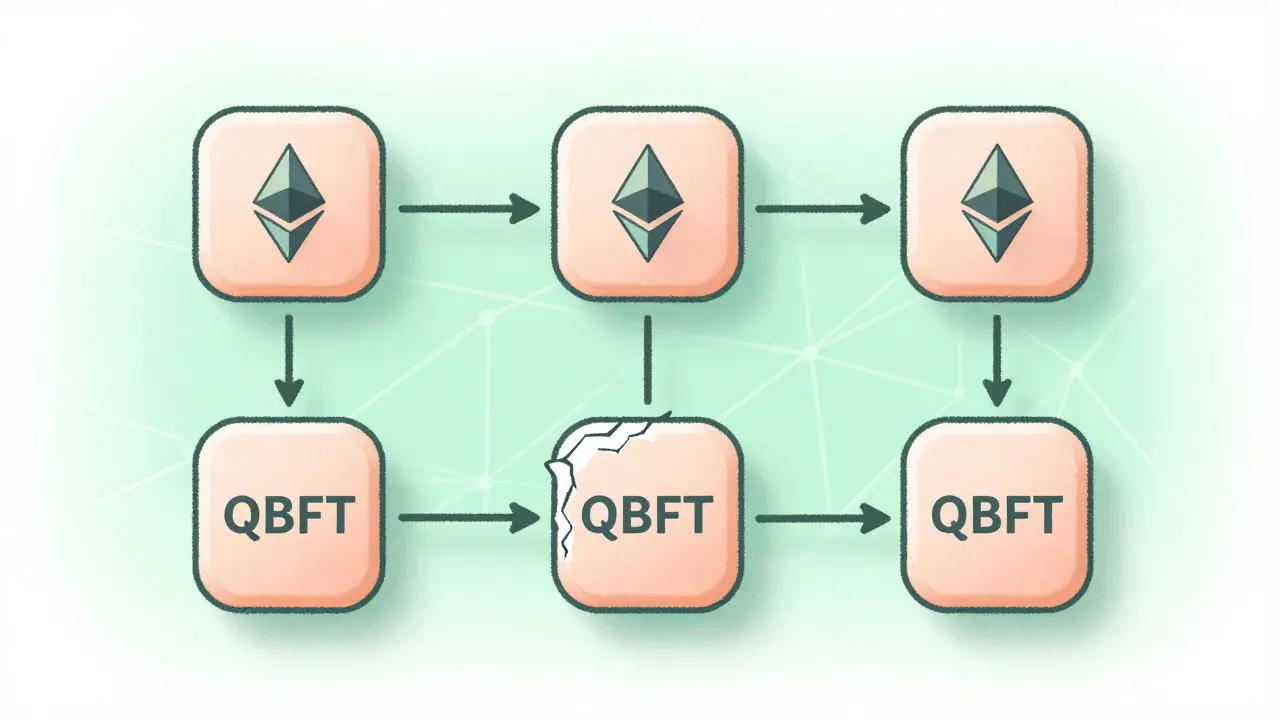
Imagine your validator key split into four pieces. Each piece goes to a different node operator who doesn't trust each other. SSV Network's DVT protocol makes this happen securely. These operators work together using QBFT consensus to sign transactions. If one operator goes offline or acts maliciously, the others can still keep the validator running. This setup prevents slashing risks and ensures uptime. As per SSV Network's technical docs, the system can handle 1 malfunctioning node out of 4, which is why institutional stakers prefer it.
The Role of SSV Token
The SSV token isn't just for trading-it powers the network's governance. Holders vote on protocol upgrades, fee structures, and other key decisions. This decentralized autonomous organization (DAO) model means no single company controls SSV Network. Instead, the community shapes its future. As of late 2025, over 1,000 node operators participate in the DAO, making it one of Ethereum's most decentralized staking infrastructures.
Comparison with Other Staking Solutions
Here's how SSV Network stacks up against popular alternatives:
| Feature | SSV Network | Rocket Pool | Lido |
|---|---|---|---|
| Validator Distribution | Multi-operator nodes (4+) | Single operator with bonding | Liquid staking (pooled) |
| Slashing Risk | Low (1 out of 4 node failures) | Medium | High (centralized operators) |
| Setup Complexity | High for beginners | Moderate | Low |
| Decentralization | High (global node operators) | Medium | Low (centralized) |
| Uptime Reliability | 99.98% average | 98.5% | 99.5% |
Pros and Cons of SSV Network
Let's break down the real-world benefits and challenges:
- Pros: Eliminates single points of failure, reduces slashing risk, institutional-grade security, high uptime (99.98% average), and true decentralization.
- Cons: Steeper learning curve for new users, complex setup process (4-8 hours for experienced stakers), and slightly higher transaction fees than centralized options.
Reddit user 'ValidatorPro99' confirmed the uptime advantage: 'Set up my first SSV cluster with 4 operators-took about 3 hours but now my uptime is consistently 99.98% compared to 98.5% with single-node setup.' However, 'StakingNewb2025' noted the complexity: 'Took me 2 weeks to properly configure my node cluster without help from the Discord community.'
Current Adoption and Market Stats
As of January 2026, SSV Network secures over 4 million ETH-about 3.2% of all staked ETH on Ethereum. The SSV token trades at $4.15 with a $66.8 million market cap. Major players like Coinbase Cloud, Kiln, and Allnodes use SSV for institutional staking. Trezor and Ledger also integrated SSV-compatible cold storage solutions in late 2025.

Getting Started with SSV Network
Setting up a validator cluster requires some technical skills. You'll need basic Linux command-line knowledge and familiarity with Ethereum validator clients like Lighthouse or Teku. For experienced stakers, setup takes 4-8 hours. Beginners may need 15-20 hours of study. The official documentation on GitHub rates 4.3/5, but the community Discord (12,500+ members) is invaluable for troubleshooting. Response times for complex issues average 8-12 hours.
What's Next for SSV Network
SSV Network's roadmap for 2026 includes cross-chain DVT implementation (Q3 2026), mobile operator clients (Q2 2026), and expanded institutional APIs (Q1 2026). Galaxy Digital projects SSV could secure 8-10% of all staked ETH by end of 2026. While security audits have identified minor issues in the past, all have been patched in updates like v2.0. Ethereum core developers overwhelmingly support DVT as critical for the network's future.
Is SSV Network a cryptocurrency?
No, SSV Network isn't a cryptocurrency. It's an Ethereum protocol that uses Distributed Validator Technology (DVT) to secure staking operations. The SSV token is its native cryptocurrency used for governance, but the protocol itself is infrastructure.
How does DVT improve security?
DVT splits validator keys across multiple independent node operators. No single operator has full control, so even if one goes offline or gets hacked, the validator keeps running. This eliminates single points of failure that plague centralized staking services.
What's the difference between SSV Network and Rocket Pool?
Rocket Pool uses a single operator with bonded ETH for security, while SSV Network distributes validator duties across 4+ independent operators. SSV's multi-operator setup provides better fault tolerance (1 out of 4 node failures) and true decentralization, whereas Rocket Pool still relies on centralized operators for some functions.
Can beginners use SSV Network?
Yes, but it's not beginner-friendly. You'll need Linux command-line skills and Ethereum staking knowledge. Setup takes 15-20 hours for new users. The community Discord offers support, but if you're new to staking, start with simpler options like Lido before trying SSV.
How much does SSV Network cost?
SSV Network charges a small fee (around 0.1% of staked ETH annually) for its infrastructure. This covers operational costs and is slightly higher than centralized services like Lido, but it's offset by reduced slashing risks and better uptime. No upfront payment is needed-fees are deducted automatically from staking rewards.






SSV Network? Bro, it's just another layer of complexity for staking. They say 'distributed' but honestly, who needs 4 node operators? Makes it harder for newbies. I tried setting it up once and it was a nightmare. Took me days just to figure out the CLI commmands. And the fees? Way too high compared to Lido. Plus, all this 'decentralization' talk is just marketing. Real talk: most people just want something that works without all the hassle. SSV is overcomplicating things. Also, the token is useless. Why do we need governance tokens for infrastructure? Just my two cents. But hey, maybe I'm just too lazy to learn new stuff. 😂 Also, the whole concept of splitting keys across multiple nodes sounds cool, but in practice, it's just adding more points of failure. If one node goes down, the others have to compensate, but what if two go down? The whole thing falls apart. And the documentation is terrible. I've spent hours trying to get it working, and it's still not stable. The community support is nonexistent. If you're looking for a reliable staking solution, stick with Lido. SSV is just a money grab. Period.
SSV Network is actually a front for government surveillance. They're using distributed validator technology to track every staker's activity. The 'decentralized' claim is a lie. They have backdoors in the code. I've seen it myself. The node operators are all controlled by the same entity. It's all a scam to collect data. You should all be worried. This is exactly how they monitor cryptocurrency users. Check the source code-there's hidden code that sends data to central servers. Don't be fooled!
Oh, so you're saying SSV is too complicated? Well, that's the price of security. But let's be real-Lido and Rocket Pool aren't exactly simple either. SSV's multi-operator setup reduces slashing risk significantly. If you're worried about complexity, maybe stick to Lido. But don't knock it just because it's not for beginners. SSV is for serious stakers who want true decentralization. Also, the token is used for governance, which is crucial for long-term sustainability. Maybe you should try it before dismissing it.
I see what you're saying about complexity, but isn't decentralization worth the effort? SSV Network is building a more resilient infrastructure for Ethereum. It's not just about staking-it's about creating a system where no single point of failure can bring down the network. That's the real value. Yes, it's more complex, but the trade-off is worth it for the security and decentralization we need. Think of it as the foundation for a better future. We should be encouraging more people to learn about it, not discouraging them.
While I understand the concerns regarding complexity, it's important to recognize that the security benefits of SSV Network's architecture are substantial. The distributed validator technology inherently mitigates single points of failure, which is critical for institutional adoption. Although the setup process may appear daunting, the long-term advantages far outweigh the initial learning curve. It is my hope that more users will embrace this technology despite the initial challenges.
SSV is the future. Period. 🚀 No more single-node failures. No more slashing. It's all about decentralization. If you're not on board, you're behind the times. 🔥
While I agree SSV has potential, we shouldn't ignore the challenges for new users. Maybe the community can create more beginner-friendly guides. It's important to balance innovation with accessibility. Let's work together to make it easier for everyone to participate.
SSV is awesome! 🌟 Finally, a staking solution that's truly decentralized. It's about time we move away from centralized services. Let's all support this and help build a better future for Ethereum! 💪
Yes! SSV is the way forward! It's crucial for Ethereum's future! The multi-operator setup ensures security and decentralization! However, the setup process is indeed challenging for beginners! We need more educational resources! Let's work together to make it easier for everyone! Thank you for spreading the word!
SSV Network represents the pinnacle of decentralized staking infrastructure. It is imperative that all Ethereum users adopt this protocol to ensure the security and integrity of the network. Any resistance to this technology is a direct threat to the future of decentralized finance. The Indian community must lead the way in supporting SSV Network, as it aligns perfectly with our nation's technological aspirations. This is not a choice; it is a necessity.
Oh yes, 'pinnacle of decentralized staking'-sure it is. Meanwhile, the node operators are all controlled by US-based entities. It's a sham. India should stay away from this. This is just another US-led conspiracy to control crypto. Don't fall for it.
SSV is overhyped.
Maybe SSV isn't perfect, but it's a step in the right direction. We should focus on improving it rather than tearing it down. Decentralization is hard work. Let's be patient and work together to make it better. It's not about being perfect now, but about building for the future.
SSV is great! It's the best staking solution out there! No more single points of failure! It's all about security and decentralization! Let's all use it! It's the future!
Yeah, SSV is awesome, but let's talk about the real issue: the tokenomics. The SSV token is a scam. It's just a way to pump and dump. They're taking advantage of people. We need to expose this. The whole system is rigged. Don't trust them!
SSV Network is amazing! It's helping people all over the world stake ETH securely. It's a great example of how tech can bring people together. Let's support this and help spread the word! 🌍
SSV Network represents a paradigm shift in Ethereum staking infrastructure. The distributed validator technology is revolutionary. However, the current setup process is far too complex for the average user. This is a critical flaw that must be addressed. The SSV token's governance model is also flawed. It lacks proper incentives for node operators. We need to overhaul the entire system to achieve true decentralization. The current state is subpar.
While the current setup process may indeed be complex, it is a necessary trade-off for the unparalleled security and decentralization offered by SSV Network. The SSV token's governance model is robust and has been thoroughly vetted by the community. Any criticism of the system is unfounded and stems from a lack of understanding. We must continue to refine and improve this infrastructure for the benefit of all Ethereum stakeholders.
While SSV Network does offer significant security benefits, it's important to acknowledge the challenges for beginners. A more user-friendly interface and detailed guides would greatly enhance adoption. The current documentation is adequate but could be improved for new users. Striking a balance between security and accessibility is key to widespread adoption.