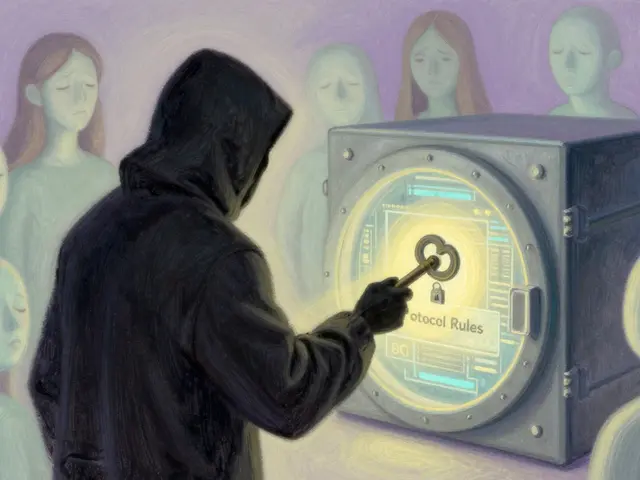

Why Proof of Work Makes Bitcoin Secure

You might have heard people argue that Proof of Work is outdated or wasteful. They point to the massive energy bills and slow transaction speeds. But here’s a fact that often gets lost in those debates: Bitcoin has never been successfully hacked at the protocol level since it launched in 2009. Not once. While centralized exchanges get robbed billions of dollars every year, the underlying ledger remains untouched. Why? Because Proof of Work (PoW) creates a security model based on physics and economics, not just code.
If you are trying to understand why this specific mechanism protects your digital gold, you need to look past the buzzwords. You need to see how electricity turns into trust. This article breaks down exactly how PoW works, why it costs so much to attack, and what happens if someone tries to cheat the system. We will skip the academic jargon and focus on the real-world mechanics that keep the network alive.
The Core Concept: Turning Energy Into Trust
At its heart, Proof of Work is a method for agreeing on the truth without needing a central authority. In traditional banking, you trust Visa or your bank to say, "Yes, Alice paid Bob." In Bitcoin, there is no CEO to call when things go wrong. Instead, the network relies on miners-computers racing to solve a difficult math puzzle.
Proof of Work is a consensus mechanism where participants expend computational effort to validate transactions and secure the network. The first miner to solve the puzzle gets to add the next block of transactions to the blockchain and earns a reward. This process ensures that altering history requires redoing all the work that came after it, making tampering prohibitively expensive.
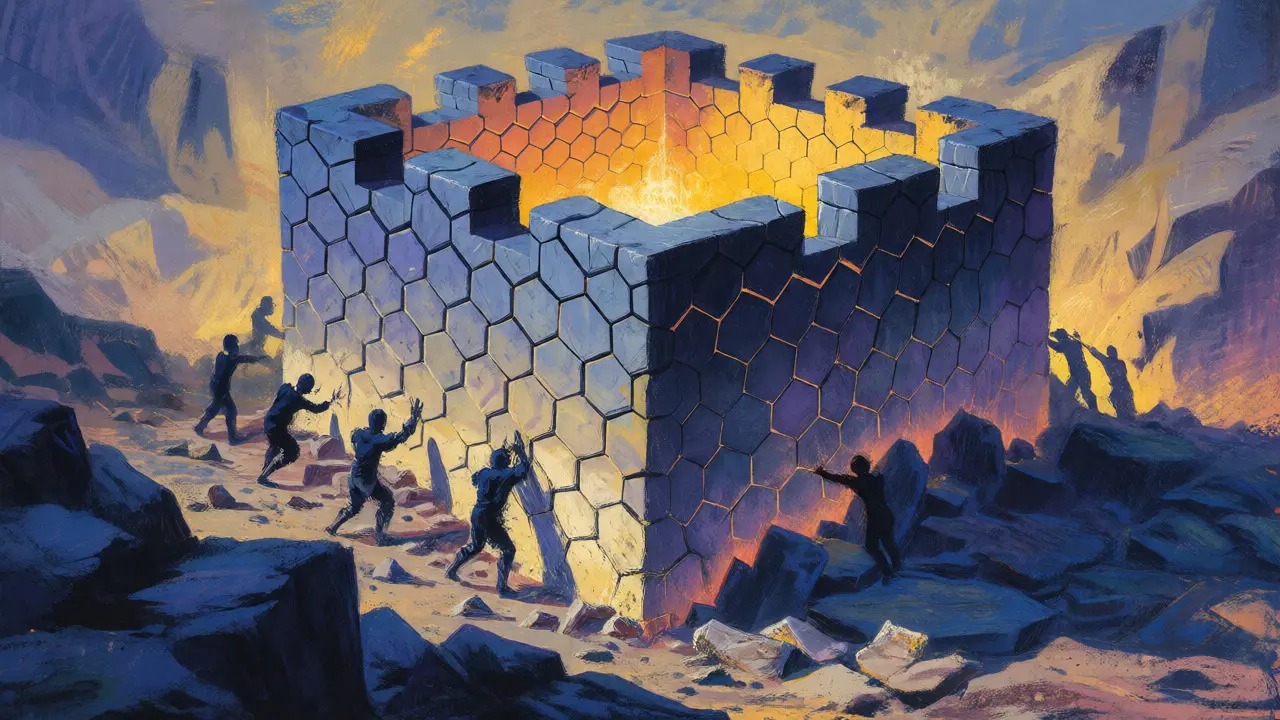
Think of it like building a wall. Every new block is a layer of bricks. To change a brick from ten years ago, you don't just swap one brick; you have to demolish and rebuild every single brick above it. That takes time, money, and massive amounts of energy. This physical cost is what makes the chain immutable. It’s not magic; it’s thermodynamics.
The Math Behind the Shield: SHA-256 and Difficulty
Bitcoin uses a cryptographic hash function called SHA-256 a secure hashing algorithm that converts data into a fixed-size string of characters, ensuring data integrity. Miners take the data from pending transactions, combine it with the previous block's hash, and run it through SHA-256 millions of times per second. They are looking for a specific output-a hash that starts with a certain number of zeros.
This isn't something you can predict. If you try to guess the right input, you have to do the work. There is no shortcut. As of late 2023, the Bitcoin network’s total computing power, known as the hashrate, exceeded 600 exahashes per second (EH/s). That means miners are performing 600 quintillion calculations every second. Just to put that in perspective, if you had a supercomputer capable of doing 1 trillion calculations per second, it would take you over 19 years to match the current network speed alone.
To keep blocks coming out roughly every 10 minutes, the network automatically adjusts the Difficulty Target. This metric changes every 2,016 blocks (about two weeks). If more miners join the race, the puzzle gets harder. If miners leave, it gets easier. This self-regulating feature ensures that the supply of new Bitcoin remains predictable, regardless of how many people are participating.
The Economic Firewall: Why Attacks Fail
Critics often ask, "What if a government or corporation decides to spend whatever it takes to break Bitcoin?" This scenario is known as a 51% Attack. An attacker would need to control more than half of the network's total hashrate to rewrite recent transactions or double-spend coins.
Here is the catch: acquiring that much power is incredibly hard. You can’t just rent servers for an hour. You need specialized hardware called ASICs (Application-Specific Integrated Circuits), land, cooling systems, and most importantly, cheap electricity. Estimates suggest that launching a sustained 51% attack today would require an investment of roughly $15 billion just to buy the necessary equipment, plus ongoing operational costs.
And what does the attacker gain? If they succeed in reversing a transaction, they disrupt confidence in Bitcoin. The price likely crashes. So, the attacker spends $15+ billion to crash the value of their own holdings and destroy the asset they were trying to exploit. It’s like burning down a house you own just to kill a mouse inside. The economic incentive structure punishes attackers and rewards honest miners, creating a powerful deterrent.
Comparing Security Models: PoW vs. PoS
You might wonder why other cryptocurrencies use different methods, like Proof of Stake (PoS). Ethereum switched to PoS in 2022, reducing its energy consumption by over 99%. So, is PoS safer? Not necessarily. It secures the network differently.
| Feature | Bitcoin (Proof of Work) | Ethereum (Proof of Stake) |
|---|---|---|
| Security Basis | Physical Energy & Hardware | Locked Capital (Staked ETH) |
| Cost to Attack | High ($15B+ estimated) | Variable (Depends on staking participation) |
| Decentralization Risk | Nakamoto Coefficient: ~3 (Top pools) | Nakamoto Coefficient: ~19 (Large stakers) |
| Finality Speed | Slow (~1 hour for high certainty) | Faster (~12 minutes) |
| Environmental Impact | High energy usage | Minimal energy usage |
PoS relies on validators locking up their coins. If they act dishonestly, they lose their stake. This is a strong social contract, but it lacks the external resource verification of PoW. In PoW, the security comes from outside the system (electricity grid, silicon chips). In PoS, the security is internal (the token itself). For a global store of value like Bitcoin, relying on external, tangible resources provides a higher barrier to entry for potential attackers.
Real-World Resilience: What History Tells Us
We don't have to rely on theory to know if PoW works. We have over 14 years of live data. Since the genesis block was mined on January 3, 2009, the Bitcoin network has processed hundreds of millions of transactions. During this time, it has survived:
- Massive Price Swings: From pennies to $60,000+, and back down again.
- Regulatory Bans: China banned mining twice, forcing miners to relocate globally. The network didn't stop; it just adjusted.
- Exchange Hacks: Mt. Gox, Coincheck, and others failed due to poor custodial practices, not protocol flaws.
- Hashrate Drops: When prices fall, inefficient miners shut down. The difficulty drops, and the remaining miners continue securing the chain seamlessly.
In July 2014, a single mining pool called GHash.io temporarily controlled over 50% of the network's hashrate. This was the closest we ever got to a 51% attack. Did they rewrite history? No. The community pressured them to split up, and they voluntarily reduced their share. This incident proved that while technical dominance is possible, social consensus acts as a secondary defense layer.

The Future of PoW Security
Some worry that as block rewards decrease (the next halving reduces rewards to 3.125 BTC), miners will lose interest. However, transaction fees make up a growing portion of miner revenue. More importantly, the security budget-the total amount spent on mining-continues to grow. Analysts predict this budget could reach $25 billion annually by 2025.
Furthermore, the industry is shifting toward greener energy. Contrary to popular belief, about 48% of Bitcoin mining now uses renewable sources, according to the Bitcoin Mining Council. Miners are incentivized to find the cheapest power, which often means stranded hydro or solar energy that would otherwise be wasted. This economic alignment helps sustainability while maintaining security.
Key Takeaways
- Energy Equals Security: The massive electricity consumption is not a bug; it is the firewall protecting the network.
- Immutability is Physical: Changing the blockchain requires re-doing the computational work of all subsequent blocks, which is economically irrational.
- No Central Point of Failure: With thousands of nodes and miners worldwide, there is no single server to hack or bribe.
- Proven Track Record: Zero successful protocol-level attacks in 14+ years of operation.
Can Bitcoin be hacked?
The Bitcoin protocol itself has never been hacked. Most incidents involve user error, exchange thefts, or software bugs in third-party applications. The core consensus mechanism remains intact.
What is a 51% attack?
A 51% attack occurs when a single entity controls more than half of the network's mining power. This allows them to reverse recent transactions, potentially enabling double-spending, but it does not allow them to create new coins or steal funds from existing addresses.
Is Proof of Work bad for the environment?
It consumes significant energy, but increasingly from renewable sources. Critics argue the carbon footprint is too high, while proponents note that miners often utilize excess capacity from green grids, helping to balance energy loads.
Why doesn't Bitcoin use Proof of Stake?
Bitcoin prioritizes maximum decentralization and security over speed. PoW provides stronger guarantees against censorship and long-term immutability, which aligns with Bitcoin's goal as a store of value rather than a fast payment network.
How long until a transaction is secure?
While a transaction is included in a block within ~10 minutes, it is generally considered fully secure after 6 confirmations (about 1 hour). This ensures that any competing forks have been abandoned by the majority of the network.