

Algeria Crypto Mining Ban: Energy Crisis and New Legal Penalties
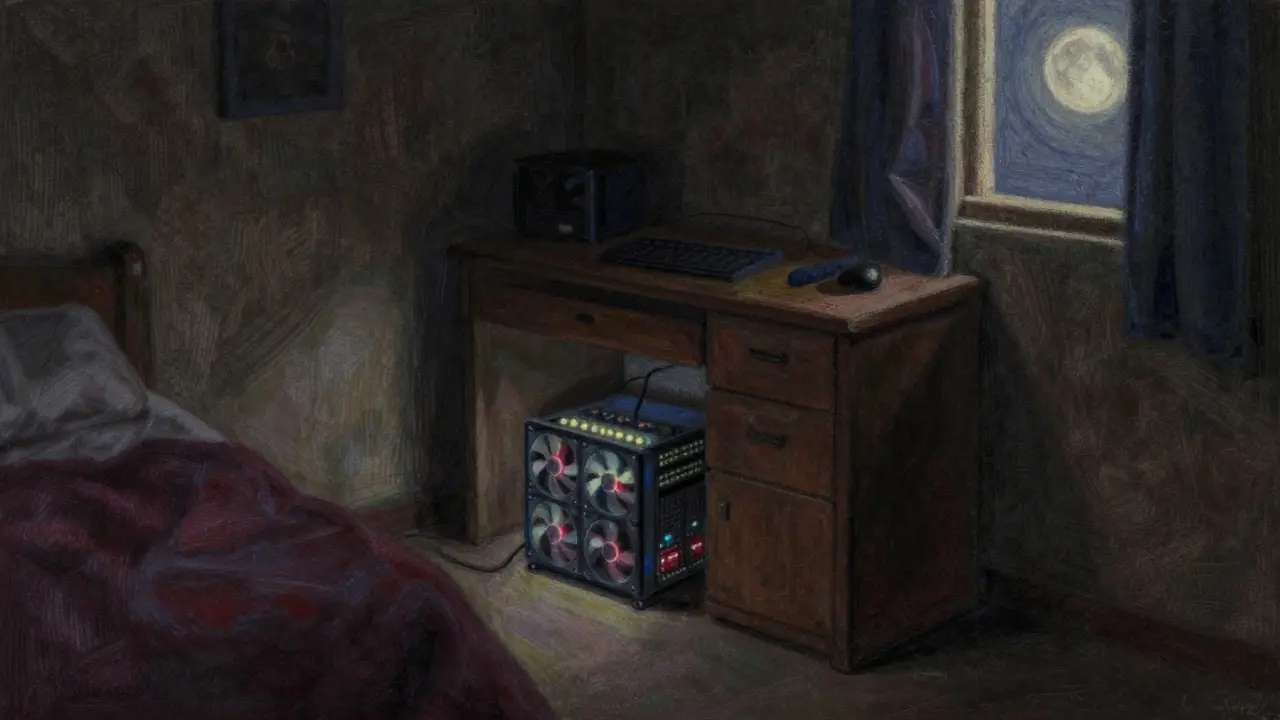
Imagine waking up to find that simply holding a digital wallet or running a computer program in your bedroom could land you in prison. For thousands of people in Algeria, this isn't a dystopian movie plot-it's the current legal reality. The government has moved beyond simple warnings, implementing one of the most aggressive crackdowns on digital assets seen globally. While many countries are debating how to tax or regulate crypto, Algeria has essentially tried to erase it from the national map.
The core of this conflict isn't just about money or financial control; it's about power-literally. The Algerian government is fighting a losing battle with its electricity grid, and they've identified cryptocurrency mining is the process of using high-powered computer hardware to solve complex mathematical puzzles to secure a blockchain network and earn rewards as a primary culprit. By treating crypto as a threat to national energy security, the state has justified a total ban that leaves almost no room for maneuver.
The Hammer Falls: Understanding Law No. 25-10
For years, Algeria had a gray area. The 2018 Financial Law mentioned restrictions, but it didn't have real teeth. That changed on July 24, 2025, with the publication of Law No. 25-10. This legislation is a blanket ban. It doesn't just target the "whales" or industrial farms; it criminalizes the entire ecosystem. If you buy, sell, hold, or even promote a virtual currency, you are breaking the law.
The law defines crypto-assets broadly as property, income, or financial assets. This means it doesn't matter if you're using Bitcoin for investment or a smaller token for a niche project-it's all prohibited. The penalties are designed to scare people into compliance. First-time offenders face between two months and a year in prison, along with fines ranging from 200,000 to 1,000,000 Algerian dinars (roughly $1,540 to $7,700 USD). If you're caught a second time, those fines double, reaching up to 2,000,000 DZD.
What makes this particularly brutal is the ban on "passive possession." In many other countries, you can hold coins even if you can't trade them. In Algeria, the mere act of owning a private key is a criminal offense. To close the last remaining loophole, the government also banned VPNs, making it significantly harder for citizens to hide their tracks or access international exchanges.
The Energy Breaking Point
Why go this far? The Algerian government points to the fragile state of its power grid. SONELGAZ, the national electricity provider, manages a system that often runs at 70% capacity. However, during the scorching summer months, when every home in the country cranks up the air conditioning, the grid hits 95-100% utilization. Any extra load can trigger widespread blackouts.
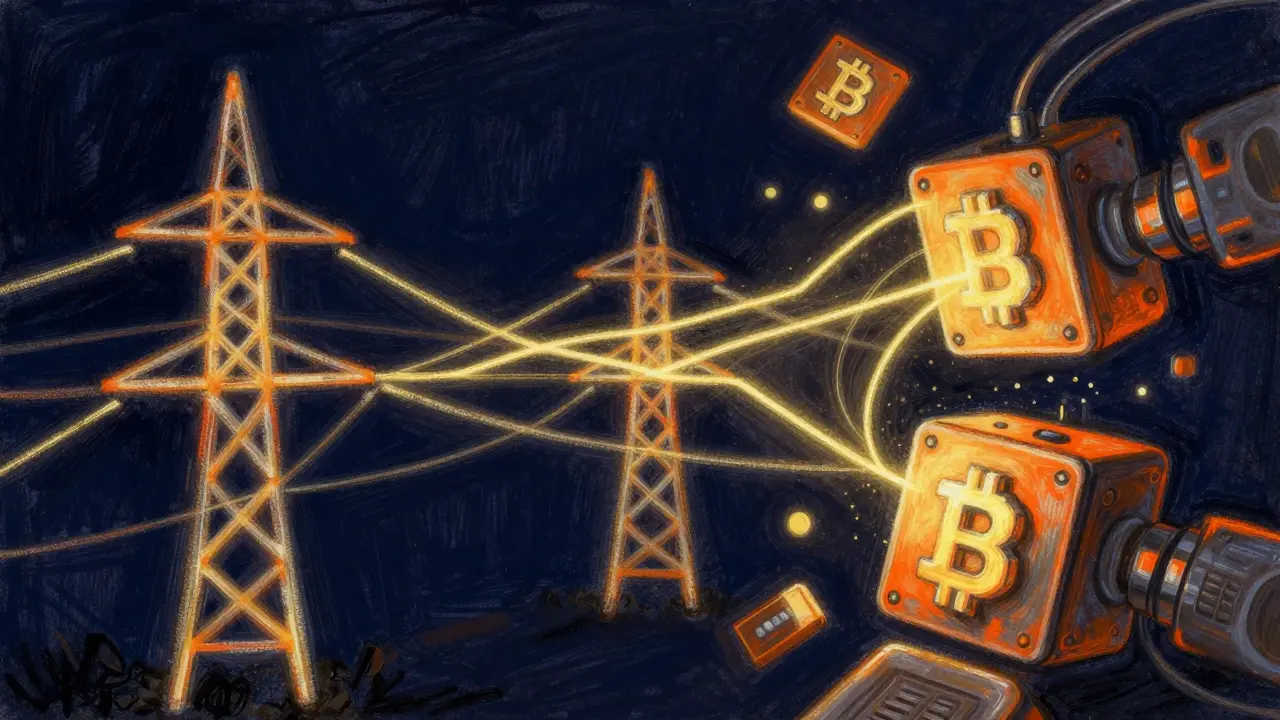
Crypto mining is an energy hog. Specifically, Proof-of-Work (PoW) consensus mechanisms require massive amounts of electricity to function. The Central Bank Governor, Salah Eddine Taleb, pointed out that mining a single Bitcoin consumes about 1,500 kWh-roughly what 30 Algerian households use in a month. When SONELGAZ detected unauthorized mining operations eating up 15-20 MW of power during a 2024 summer peak, it was the final straw. That might seem small, but it represented 1.5% of the entire national grid's capacity during a critical period.
There is also an economic frustration here. The government heavily subsidizes electricity, offering residential rates as low as $0.035 per kWh. This is a fraction of the $0.14 global average. Miners were essentially using government-subsidized energy to generate private profit, which the state now views as a theft of public resources.
| Country | Mining Status | Holding Status | Regulatory Approach |
|---|---|---|---|
| Algeria | Strictly Banned | Criminalized | Prohibitionist |
| UAE | Regulated | Legal | Innovation-Driven |
| Egypt | Restricted | Permitted (Limited) | Banking Prohibition |
| Tunisia | Licensed | Legal | Framework-Based |
A Region Divided: The Outlier Effect
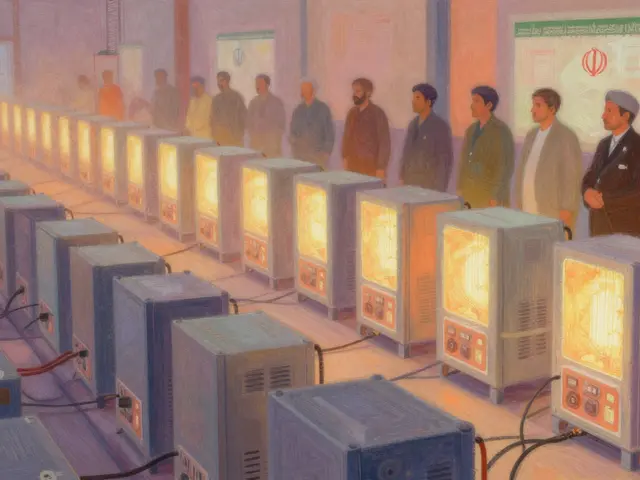
When you look at Algeria's neighbors, the ban looks even more extreme. The MENA region is currently a tale of two philosophies. On one side, you have the UAE, Bahrain, and Saudi Arabia. The UAE's Virtual Assets Regulatory Authority (VARA) is actively licensing firms and attracting billions in capital. On the other side, you have Algeria, which has become a regional outlier.
Even Morocco, known for its strictness, hasn't gone this far. While Morocco has imprisoned users in the past, Algeria's Law No. 25-10 is systemic. It targets the very existence of the assets. This has led to what experts call a "crypto brain drain." Data from LinkedIn suggests that about 37% of Algerian blockchain developers moved to Tunisia or Morocco between 2023 and 2025. They aren't just leaving for better pay; they're leaving because their skill set has been effectively criminalized at home.

The Human Cost and the "Black Market" Reality
For the average Algerian, the ban has created a climate of fear. On forums like Reddit, users report shutting down modest mining setups-some only making $350 a month-because the risk of a surprise inspection is too high. There are documented cases of university students having their equipment seized by the Gendarmerie in cities like Oran. The state has even allocated 1.2 billion DZD to fund specialized cyber units to hunt down these operations.
However, the ban has a glaring blind spot: it treats all crypto the same. Most users complain that the law doesn't distinguish between energy-heavy Proof-of-Work mining and Proof-of-Stake (PoS) systems, which use negligible electricity. By banning everything, the government has pushed a burgeoning tech community underground rather than guiding it toward sustainable practices.
Some academics, like Dr. Leila Bencharif from Algiers University, argue that this is a massive strategic error. Algeria has a staggering 22GW of solar energy potential. Instead of banning mining, the state could have mandated that miners use excess solar power, turning a grid burden into a revenue stream. Instead, the country's ranking in the Global Crypto Adoption Index has plummeted from 87th in 2023 to 112th in 2025.
What Now? The Path Forward
Is there any hope for a reversal? Historically, about 68% of crypto bans implemented between 2020 and 2025 were eventually softened or reversed due to economic pressure. But Algeria is different. Because their motivation is tied to physical infrastructure (the power grid) rather than just financial speculation, they are less likely to budge unless they find a way to integrate mining with renewable energy.
For now, the government is trying to redirect tech talent. The passage of Law No. 25-12, which governs traditional mining (the mineral kind), suggests they want innovation in sectors they can actually control. Until a new white paper or a shift in energy policy occurs, the only legal move for an Algerian citizen regarding cryptocurrency is to stay far away from it.
Can I still hold cryptocurrency in Algeria?
No. Under Law No. 25-10, the passive holding of cryptocurrency is strictly prohibited and criminalized. Possession of digital assets can lead to prison time and heavy fines.
What are the penalties for crypto mining in Algeria?
First-time offenders face prison sentences from two months to one year and fines between 200,000 and 1,000,000 DZD. Repeat offenders face doubled fines (up to 2,000,000 DZD).
Why did Algeria ban cryptocurrency mining?
The primary reason is energy concerns. Crypto mining places immense strain on the national electricity grid, especially during summer peaks, and often exploits heavily subsidized residential power rates.
Are VPNs legal in Algeria?
Current reports indicate that VPNs have been banned as part of the broader effort to prevent citizens from accessing prohibited cryptocurrency services and exchanges.
Does the ban affect blockchain developers?
While blockchain technology itself is a broad field, the ban on "promotion" and the criminalization of crypto-assets have created a chilling effect, leading many developers to move to other countries.


The energy argument is a total smokescreen for monetary control
They just don't want people moving wealth out of the dinar into decentralized assets
It is truly unfortunate to see such a rigid approach to technological evolution. Perhaps a regulated sandbox would have served the public interest better. ☹️
imagine being so primitive that you treat a private key like a weapon of mass destruction lol
this is absolute bottom tier governance by some mediocre bureaucrats in a wasteland
the irony of banning vpn's to stop crypto is just peak comedy
it's like trying to stop water with a sieve but sure let's pretend it works
this is exactly how the globalists operate they start with energy excuses then they take your keys then they track your every breath
wake up people it is not about the grid its about the digital panopticon
they are watching everyone now
if you have a wallet you are already on a list
Maybe the real alchemy here is turning a power outage into a prison sentence
It's a fascinatingly grim way to handle a utility crisis, really
so sad for those students in oran
imagine just wanting to learn some new tech and getting your gear seized
my heart goes out to those just trying to make a tiny bit of extra money for their families
Oh honey, let's talk about the sheer absurdity of using an antiquated Proof-of-Work paradigm as the sole justification for a blanket ban on all distributed ledger technology, which is essentially like banning all internal combustion engines because one specific 1970s truck leaks oil everywhere
The legislative framework here is a complete joke, lacking any nuance between energy-intensive hashing and the virtually nonexistent footprint of Proof-of-Stake protocols, showcasing a level of technical illiteracy that would be laughable if it weren't so damaging to the regional GDP
They're essentially flushing their most talented developers down the drain while their neighbors in the UAE are building the future of finance with actual regulatory clarity
Maybe if they spent less time hunting students in their bedrooms and more time studying the 22GW of solar potential mentioned in the article, they wouldn't be the laughingstock of the MENA region
It's a masterclass in how to kill an industry before it even starts
I mean really, who thinks banning VPNs in 2025 is a sustainable strategy for network security or social control
The cognitive dissonance required to believe this will work is staggering
They're creating a black market that will be ten times harder to monitor than a regulated exchange
Absolute amateur hour over there
I've seen better planning in a middle school science project
The sheer lack of foresight is breathtaking
Good luck finding blockchain devs when they all have residency in Tunis
It's just poetic in its failure
Truly a gold standard for how not to run a country in the digital age
This is a devastating blow to the youth of Algeria! We must find a way to encourage these brilliant minds to seek mentorship elsewhere until the political tide turns!
The economic disparity between these nations is becoming quite evident through their tech policies
i already told everyone that PoW was a dead end anyway so this is basically a favor to them
who cares if they ban it anyway nobody is actually making money with crypto anymore
There is a certain tragic irony in the fact that the very tools designed to liberate financial autonomy are being used as the catalyst for increased state surveillance and the criminalization of passive ownership, reflecting a deeper struggle between the desire for individual sovereignty and the state's need for absolute control over its most basic resources like electricity
When we observe the migration of developers to Tunisia or Morocco, we aren't just seeing a shift in labor, but a physical manifestation of the intellectual void being created by fear-based governance
It's just common sense that if you use cheap power for your own gain you will get caught eventually
The sheer audacity of thinking a VPN ban would stop the determined is almost charming in its naivety 🙄
They're basically trying to stop the ocean with a plastic bucket and calling it a victory for national security 🤡
People who mine on subsidized residential power are just thieves stealing from the public grid
They deserve the prison time for putting everyone's electricity at risk
the quality of this legal framework is embarrassingly low
it's just a lazy way to solve a grid problem
I lavely believe that we can still find a path toward cooperration if the govvernment listens to the academic community!
India would never let such a brain drain happen! We embrace the future while others hide in the dark!
GET OUT OF THERE NOW! If you're a dev in Algeria, pack your bags and get to Tunisia before they lock you up for a line of code!