

Crypto Mining in Iran: Laws, Restrictions, and Risks Explained
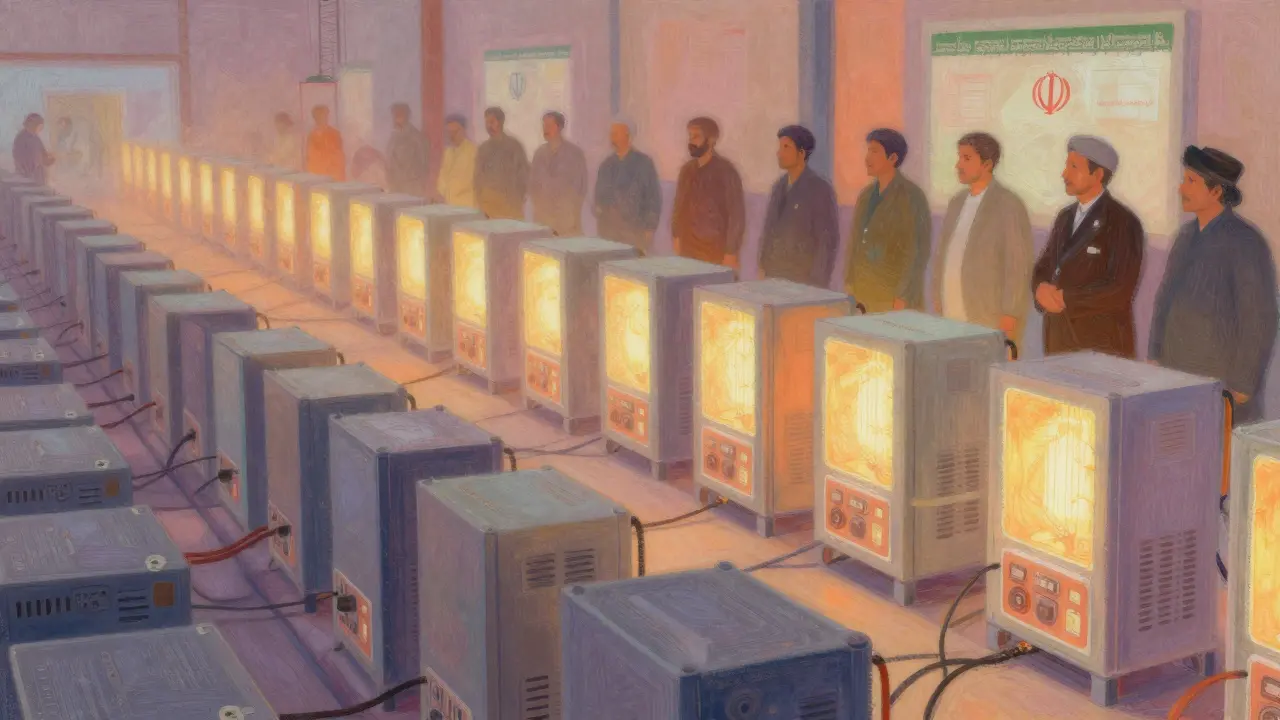
Cryptocurrency mining in Iran is a legally permitted but heavily restricted industry where operators must navigate a complex web of licensing requirements, energy tariffs, and sudden policy shifts. If you are thinking about setting up mining operations there, or simply trying to understand why the Iranian government keeps changing its mind, you need to look beyond the headline that says "it's legal." The reality on the ground is far more complicated. Since 2018, the status of crypto mining has swung from ignored gray area to formalized industry, then to emergency bans, and now to a strict regulatory regime dominated by state interests.
The core appeal for miners has always been electricity. Iran offers some of the lowest industrial power rates in the world, hovering around $0.004 per kWh. This cheap energy allowed Iran to capture nearly 5% of global Bitcoin mining hash rate at its peak. But that same energy dependency is exactly why the government is so aggressive in cracking down. When the grid fails, the miners get cut off first-or worse, arrested.
The Legal Framework: Who Actually Controls Crypto?
To understand the rules, you have to know who is writing them. For years, regulations were scattered across different ministries. That changed in January 2025 when President Masoud Pezeshkian issued a directive centralizing all authority under the Central Bank of Iran (CBI). The CBI now acts as the sole regulatory body for all cryptocurrency activities, including mining, trading, and exchanges, requiring all participants to obtain licenses and conduct transactions through designated bank accounts.
This means if you want to mine legally, you cannot just plug in your ASICs. You need a license. The process involves two main bodies:
- Ministry of Industry, Mine and Trade: Issues the initial operational license for mining facilities.
- Central Bank of Iran (CBI): Oversees financial compliance, transaction transparency, and anti-money laundering measures.
The CBI’s mandate is broad. They have unrestricted access to data, statistics, and records of any entity involved in crypto. This level of surveillance is designed to prevent capital flight and ensure that crypto profits are converted back into Rials through official channels. For foreign investors, this creates a significant hurdle. You are not just competing with local miners; you are operating in an environment where every transaction is visible to the state.
It is also worth noting that the CBI is pushing its own digital currency, the "Rial Currency" (or e-Rial). Unlike Bitcoin, this cannot be mined. Its supply is regulated by the bank. The long-term goal appears to be replacing decentralized cryptocurrencies with this state-controlled digital asset, which makes private mining less attractive over time.
The Energy Crisis: Why Bans Keep Happening
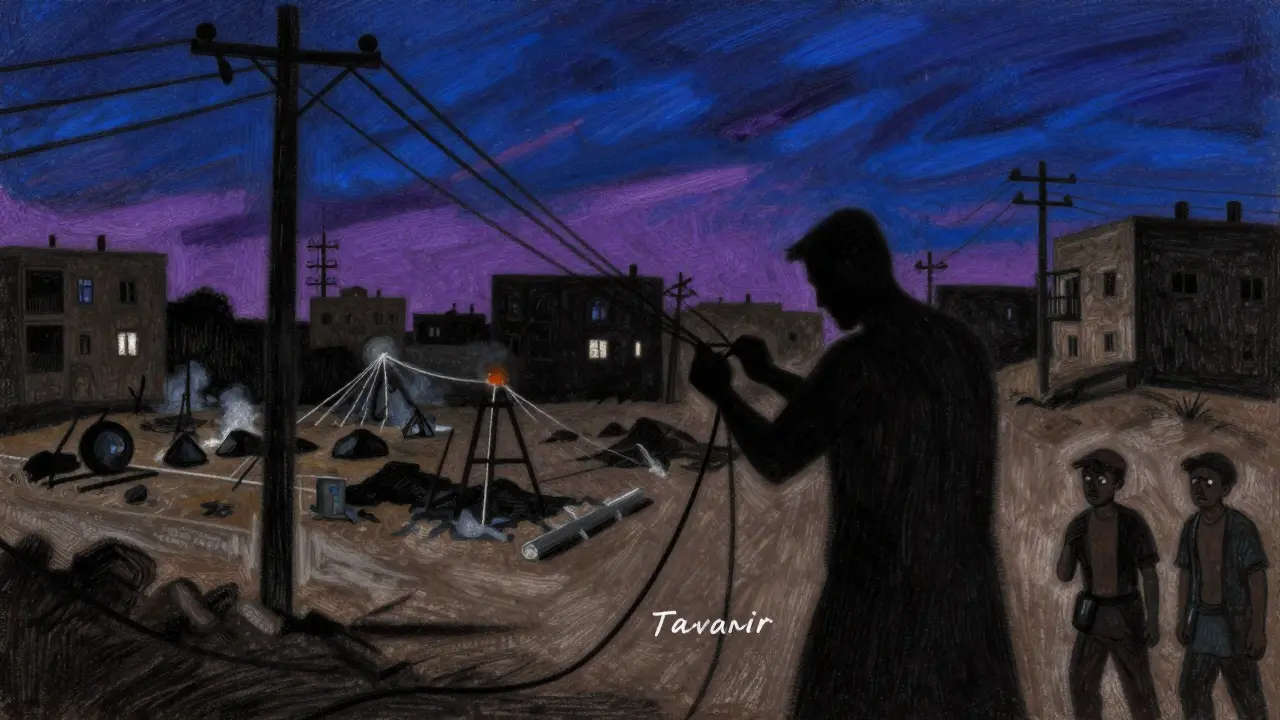
The biggest threat to crypto mining in Iran is not the law-it is the power grid. Iran suffers from chronic energy shortages, particularly during summer months when demand peaks. The state-owned power provider, Tavanir, Iran's national electric power company responsible for transmission and distribution, frequently blames unauthorized crypto mining for blackouts and implements strict rationing.
In December 2024, nationwide blackouts forced the government to act. Tavanir estimated that illegal miners were stealing approximately 2,000 megawatts of electricity. In response, they implemented harsher penalties and stricter allocation limits. During the summer of 2024, a four-month nationwide ban on mining was enforced. Operations resumed only after new licensing rules were put in place to cap energy consumption.
Here is the catch: even licensed miners face higher electricity tariffs than other industries. While subsidized rates exist, the specific tariff for crypto mining is among the highest for power-intensive sectors. Furthermore, during peak demand periods, Tavanir prioritizes residential and heavy industrial consumers. Miners are often the last to receive power and the first to be disconnected.
| Factor | Iran | Kazakhstan | United States |
|---|---|---|---|
| Electricity Cost (Industrial) | ~$0.004/kWh (Subsidized) | ~$0.03-$0.05/kWh | ~$0.05-$0.10/kWh |
| Regulatory Stability | Low (Frequent bans) | Moderate (Stable framework) | High (Clear guidelines) |
| Licensing Requirement | Mandatory (CBI + Ministry) | Required (Energy permit) | Varies by State |
| Grid Reliability | Poor (Seasonal outages) | Moderate | High |
| Political Risk | Very High (Sanctions) | Medium | Low |
The Shadow Market: Illegal Mining and State Actors
One of the most frustrating aspects of mining in Iran is the uneven playing field. While small-scale operators struggle to get licenses and pay high tariffs, large-scale illegal operations thrive. How? By hiding in plain sight.
A common workaround involves setting up mining farms inside mosques and religious institutions. These entities receive free electricity from the government. Miners partner with these institutions, using their power connections to bypass Tavanir’s billing systems entirely. This practice undermines the official regulatory framework and fuels resentment among legitimate businesses.
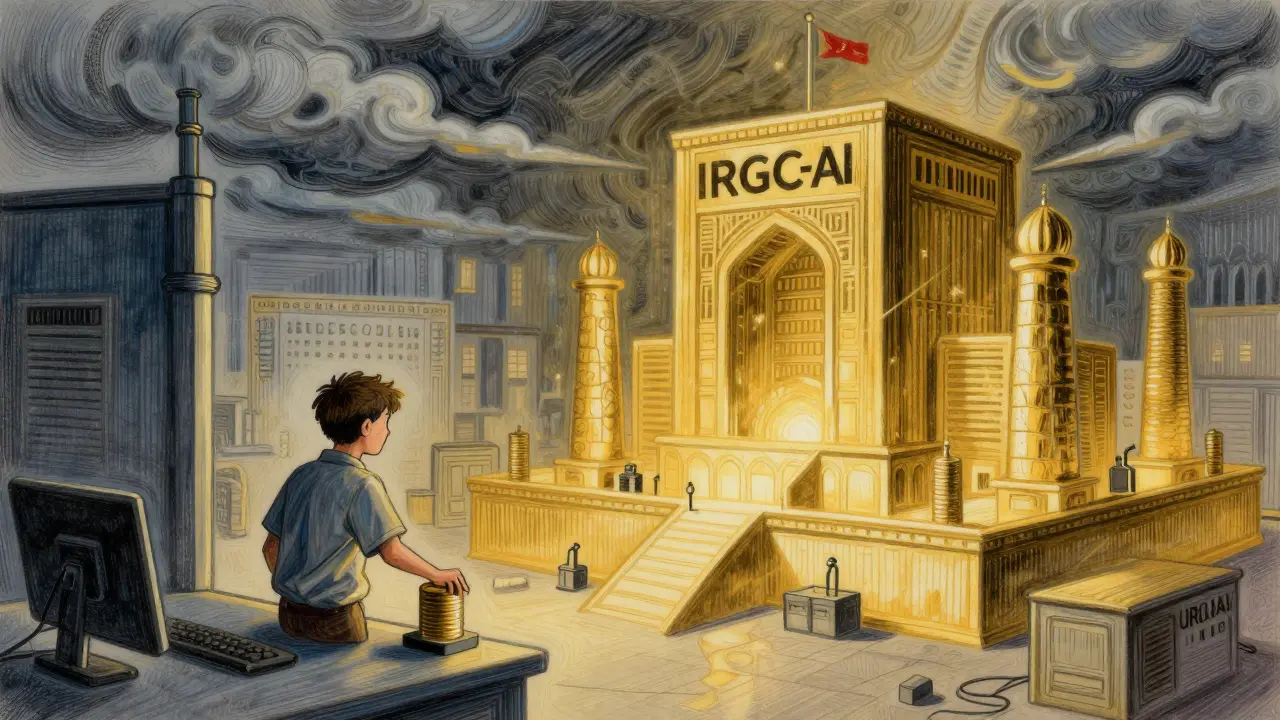
Even more concerning is the role of state-affiliated entities. The Islamic Revolutionary Guard Corps (IRGC), A powerful military and political organization in Iran that operates significant cryptocurrency mining facilities, often exempt from standard regulations and energy costs. and entities linked to Supreme Leader Ali Khamenei have established massive mining operations since 2019. One documented facility in Rafsanjan, Kerman province, runs a 175-megawatt Bitcoin farm. These operations are joint ventures between IRGC-linked companies and Chinese investors.
These state-backed miners do not pay electricity bills. They draw subsidized power without restriction. According to investigations by NCR-Iran, these entities control approximately 65% of Iran’s total mining capacity. This creates a dual market: one for private citizens facing strict rules and high costs, and another for politically connected actors operating with impunity. For foreign investors, this dynamic poses a severe risk. You are competing against players who can ignore the rules that bind you.
Recent Regulatory Shifts: 2024-2026
If you thought the rules were settled, think again. The period from late 2024 to early 2026 saw rapid and disruptive changes:
- December 2024 Payment Blockade: The Central Bank effectively blocked all crypto-to-rial payments via internet websites. Major domestic exchanges stopped functioning. Users reported being unable to convert crypto to fiat for weeks.
- January 2025 Partial Reversal: The government unblocked exchanges but required them to integrate a government API. This restored limited functionality but gave authorities full visibility into user transactions.
- February 2025 Advertising Ban: A global ban on cryptocurrency advertising-both online and offline-was enacted. This drastically reduced public awareness and increased user acquisition costs for exchanges by 300%.
- March 2025 Sanctions Pressure: International sanctions continued to complicate cross-border transactions, leading to an 11% decline in crypto inflows during the first half of 2025, according to TRM Labs.
These moves signal a clear trend: the government wants to control crypto, not eliminate it. But control means surveillance, taxation, and alignment with state interests. Private enterprise is increasingly squeezed out.
Risks for Foreign Investors
Foreigners are technically allowed to invest in Iran’s crypto sector. The government has explicitly invited international participation. However, the risks are substantial:
- Sanctions Exposure: US and EU sanctions make banking transactions difficult. Moving profits out of Iran requires navigating complex correspondent banking networks, which many Western banks refuse to touch.
- Asset Seizure: Without strong political connections, there is little recourse if assets are frozen or seized. Legal protections are weak for non-citizens.
- Operational Instability: Power outages can halt production for days or weeks. Insurance against such losses is virtually nonexistent.
- Regulatory Whiplash: Policies can change overnight. A profitable operation today could be banned tomorrow due to a grid crisis.
Expert analysis from AGSI suggests that cryptocurrency is unlikely to help Iran evade sanctions in the short term. Instead, it serves as a tool for internal capital control. For foreign investors, this means the window for easy profit is closing fast.
Practical Steps for Compliance
If you decide to proceed despite the risks, here is what you need to do:
- Secure Licensing: Apply through the Ministry of Industry, Mine and Trade. Prepare detailed documentation on hardware specifications, energy consumption projections, and financial audits.
- Monitor Regulations Daily: Assign a compliance officer to track updates from the CBI, Tavanir, and the Ministry. Changes happen frequently.
- Use Approved Hardware: Only use government-approved mining rigs. Unapproved equipment may be confiscated.
- Establish Local Partnerships: Partner with reputable local firms that have experience navigating bureaucracy. Avoid entities with unclear ownership structures.
- Plan for Outages: Invest in backup power solutions or locate operations in special economic zones with dedicated power feeds. Note that these zones are often dominated by IRGC affiliates.
Remember, compliance is not a one-time task. It is an ongoing effort. The learning curve is steep, and mistakes can be costly.
The Future of Crypto Mining in Iran
Looking ahead, the outlook is cautious. The government’s push toward the e-Rial suggests a long-term strategy to replace decentralized cryptocurrencies with state-controlled alternatives. Private mining will likely face increasing restrictions, especially if energy crises worsen.
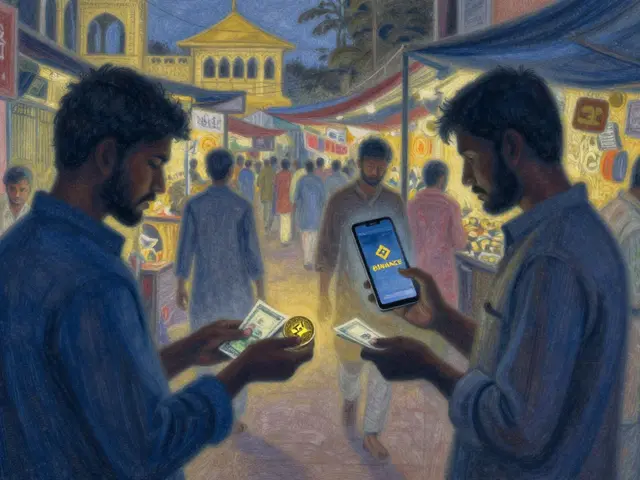
Domestic usage has shifted toward peer-to-peer transactions to avoid platform restrictions. LocalBitcoins data shows a 78% increase in P2P volume following the December 2024 payment blockade. This indicates resilience among users but also highlights the limitations of centralized exchanges.
For miners, the key question is sustainability. Can you remain profitable when energy costs rise, regulations tighten, and competition comes from state-backed giants? For many, the answer is no. The era of easy gains in Iran’s crypto mining sector is over. What remains is a high-stakes game played by those with deep pockets and deeper connections.
Is cryptocurrency mining legal in Iran?
Yes, cryptocurrency mining is legal in Iran, but it requires a license from the Ministry of Industry, Mine and Trade and oversight from the Central Bank of Iran. Operating without a license is illegal and subject to penalties, including confiscation of equipment and fines.
Who regulates crypto mining in Iran?
The Central Bank of Iran (CBI) is the primary regulator for all cryptocurrency activities, including mining. The Ministry of Industry, Mine and Trade issues operational licenses, while Tavanir manages energy allocation and enforcement.
Why does Iran ban crypto mining periodically?
Iran bans crypto mining during periods of severe energy shortages, typically in summer. The government blames unauthorized mining for straining the national grid. These bans are often temporary but disrupt operations significantly.
Can foreigners invest in crypto mining in Iran?
Technically yes, the government invites foreign investment. However, practical challenges include US/EU sanctions, difficulty repatriating profits, regulatory instability, and competition from state-affiliated entities like the IRGC.
What are the electricity costs for mining in Iran?
Licensed miners pay subsidized rates around $0.004 per kWh, though specific mining tariffs are higher than other industries. Illegal miners often bypass these costs by using free power from religious institutions or state facilities.
How does the IRGC affect the mining market?
The IRGC controls approximately 65% of Iran’s mining capacity through large-scale, state-backed operations. These facilities operate with political protection, often ignoring energy costs and regulations, creating an unfair competitive landscape.
What happened with the February 2025 advertising ban?
In February 2025, Iran banned all cryptocurrency advertising online and offline. This reduced public awareness, increased user acquisition costs for exchanges by 300%, and signaled tighter state control over crypto promotion.
Is it safe to store crypto in Iranian exchanges?
Safety varies. Exchanges must comply with CBI regulations and integrate government APIs for transaction monitoring. While this adds security against fraud, it also exposes user data to state surveillance. Peer-to-peer transactions have become more popular to mitigate this risk.



iran is a mess for crypto mining honestly. why would anyone even bother with the sanctions and the grid failing every other week? it's just bad business sense unless you have connections to the IRGC which most of us don't
You are completely missing the point here, Michelle. The article clearly states that electricity costs are $0.004 per kWh. Do you have any idea what that means for margins? It is not about 'connections' when the math works out so favorably. People who complain about regulations without looking at the bottom line are just lazy critics. The risk is high, yes, but the reward potential is astronomical if you survive the winter.
I think we should look at this from a different angle. Maybe the regulatory framework is actually trying to stabilize the market rather than crush it. It seems like the Central Bank wants control, but maybe that provides some safety for legitimate operators? I'd love to hear more thoughts on how small miners can adapt to these new licensing requirements without getting crushed by the big players.
Oh wow, this is truly heartbreaking to read. Imagine being a small miner in Iran, working your heart out, only to have the government pull the plug because they need power for their own projects. It’s like watching a slow-motion disaster unfold. The state-backed entities controlling 65% of the capacity? That’s not competition, that’s oppression. My heart goes out to those struggling to keep their rigs running while the IRGC operates with impunity. 😢💔
Hey everyone! 👋 Just wanted to add that the part about using mosques for illegal mining is wild but makes sense in a twisted way. Free electricity is free electricity, right? 😂 But seriously, the risk of confiscation is real. I’ve seen friends lose entire farms overnight. If you’re thinking of going there, make sure you have solid local partners who know the bureaucracy inside out. Don’t trust just anyone! 🚀⛏️
lol this article is bs. u guys think its easy to get licenses? no way. the system is rigged against foreigners period. i tried to invest in similar markets and got burned bad. dont believe the hype about cheap energy either. once they realize ur making money they will tax u into oblivion or just seize everything. stay away from iran if u value ur capital.
Fascinating read, though I suppose 'fascinating' is a polite word for 'nightmare scenario.' The idea that the government wants to replace Bitcoin with a state-controlled e-Rial is almost poetic in its irony. They want the tech but none of the freedom. I guess that’s the deal with authoritarian regimes-they always try to co-opt the tools meant to liberate them. 🙄
I see a lot of negativity here, but let’s focus on the opportunities! 🌟 The fact that Iran captures 5% of the global hash rate shows resilience. Even with the bans, miners find ways to adapt. P2P transactions are up 78%! That’s huge. It proves that demand drives innovation. If you can navigate the compliance steps outlined, there might still be gold to be found. Stay positive! ✨📈
i was wondering about the electricity tariffs. the article says licensed miners pay higher rates than other industries but still super cheap compared to usa. does that mean if you get a license you are safe from blackouts? or do they still cut power during summer peaks? also curious if foreign investors can actually repatriate profits given the sanctions. seems like a huge hurdle.
The macroeconomic implications are staggering. When Tavanir estimates 2,000 MW stolen by illegal miners, that’s not just a grid issue; it’s a systemic failure of resource allocation. The dual market structure-state-backed vs. private-creates a classic rent-seeking environment. For institutional investors, the alpha is negligible due to sovereign risk. However, for decentralized autonomous organizations (DAOs) operating off-grid, there might be niche opportunities in hardware leasing. 🧐📊
india has better options for mining honestly. less political risk and growing renewable energy infrastructure. iran is too unstable. the irgc involvement is a red flag for any serious investor. :/
everyone is ignoring the obvious truth here. the government isn't banning mining because of energy shortages. they are doing it to consolidate power. the e-rial is just a tool for surveillance. bitcoin is censorship resistant which is why they hate it. the whole narrative about 'grid stability' is propaganda to justify crushing independent wealth creation. wake up people.
im so scared reading this! my cousin lives in tehran and he told me his neighbor lost his rig last month. it sounds like a horror movie. how do people even sleep knowing the government could take everything tomorrow? i feel so bad for them. maybe they should move to canada or something where its safer? 😰
It is imperative that we consider the geopolitical ramifications of such activities. The United States sanctions are not merely bureaucratic hurdles; they are legal barriers that carry severe penalties. To engage in such ventures is to invite significant liability. One must proceed with extreme caution and perhaps reconsider entirely. The risks outweigh the rewards for the average individual.
when you look at the history of crypto adoption in sanctioned countries you see a pattern of resilience mixed with exploitation. the irgc controls 65 percent of capacity which is absurd but predictable in an oligarchy. the question is not whether you can mine profitably but whether you can extract that profit before the regime changes its mind again. it is a game of chicken with the state and usually the state wins because they write the rules and control the electricity supply. most people underestimate the operational complexity of maintaining uptime in such an environment.
Ugh, reading this gives me anxiety. 😩 The idea of investing millions into a country that can just ban your industry overnight is terrifying. And don’t even get me started on the IRGC stealing all the good spots. It’s like playing poker against the house where the dealer cheats. I’d rather put my money under a mattress than risk it in Tehran. 💸😤