

Sustainable vs Unsustainable Yield Farming in Blockchain: What Really Matters for Long-Term Value
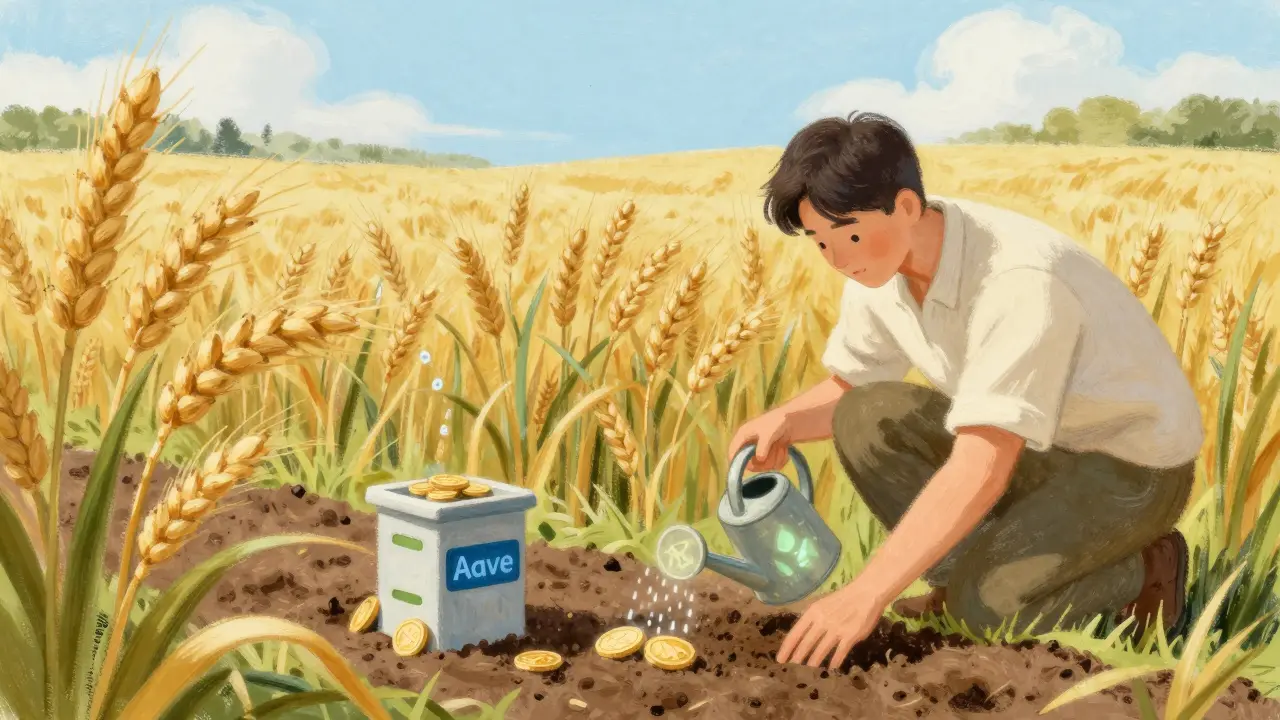
When you hear "yield farming," most people think of locking up crypto to earn rewards. But what if the real question isn't how much you earn - but whether what you're earning is built on a foundation that can last?
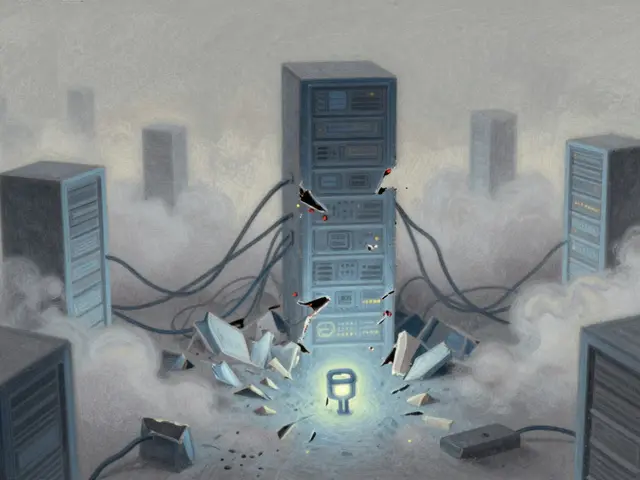
Just like in agriculture, where unsustainable practices drain the soil for quick harvests, some DeFi protocols are designed to extract maximum short-term returns while ignoring long-term system health. This isn't just theory - it's happening right now. And the consequences are already showing up in collapsed protocols, rug pulls, and wallets that lost everything when the incentives dried up.
What Is Sustainable Yield Farming?
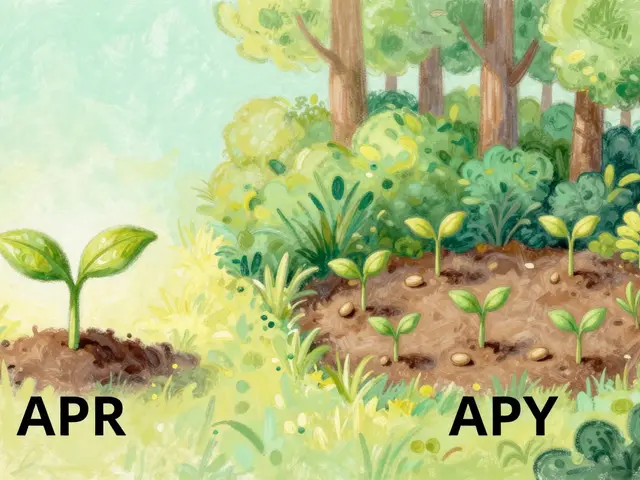
Sustainable yield farming in blockchain means designing incentive structures that don’t rely on endless token printing to keep users locked in. It’s about creating economic feedback loops where value is generated from real usage, not just speculation. Think of it like regenerative farming: you’re not just taking from the land - you’re improving it.
Take Aave, for example. Instead of flooding the market with new governance tokens to lure liquidity providers, Aave built its rewards around usage fees. The more people borrow and lend, the more fees flow into the protocol. Those fees then fund treasury growth, which can be used to buy back tokens or reward long-term holders. No artificial inflation. No pump-and-dump cycles. Just real economic activity generating value.
Another example is Curve Finance. Its liquidity providers earn fees from trading volume, not just newly minted tokens. Curve’s CRV token exists mostly for governance, not as a primary reward. That means users stay because the system works well, not because they’re chasing the next airdrop.
These protocols don’t need to offer 100% APY to attract users. They attract them because they’re reliable. They’ve built trust through transparency, fee-based revenue, and minimal token dilution.
What Is Unsustainable Yield Farming?
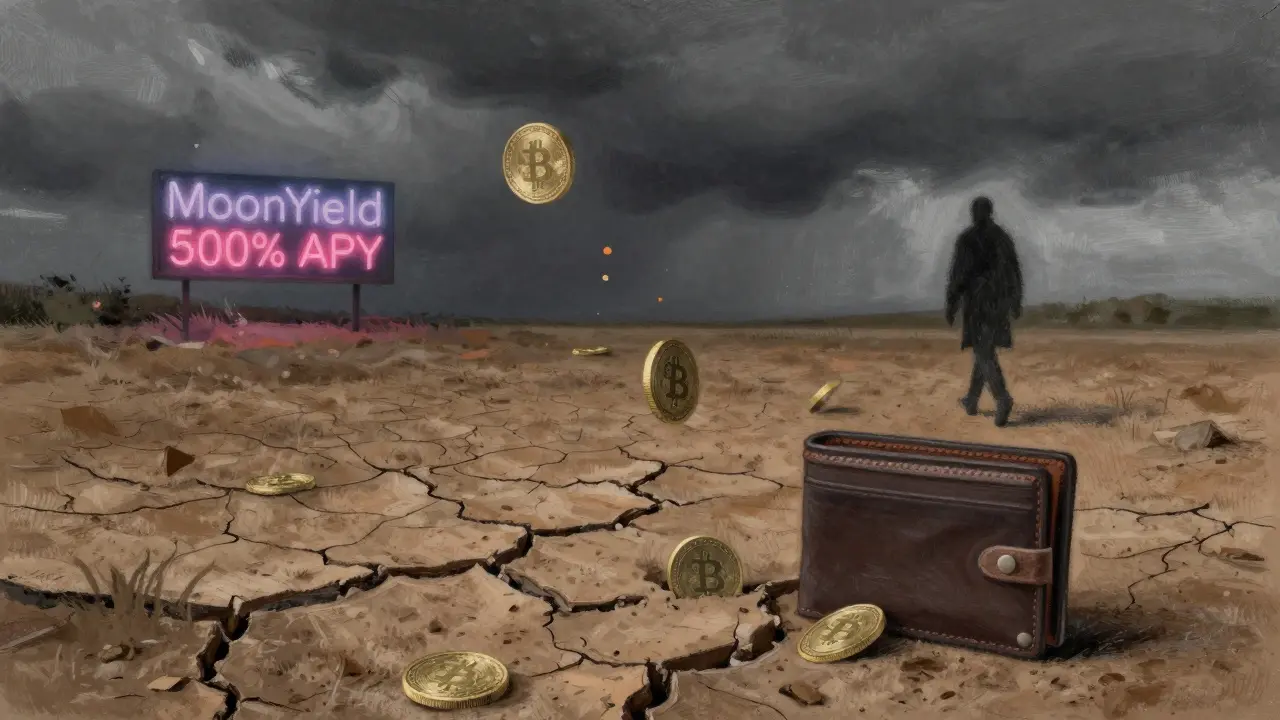
Unsustainable yield farming is the crypto equivalent of clear-cutting a forest for instant timber profit. It’s when a protocol launches with a flashy reward schedule - 500% APY, 10x token multipliers, daily airdrops - but has no real revenue model to back it up.
These projects rely on a constant influx of new users to pay off earlier ones. It’s a Ponzi structure disguised as DeFi. When new money stops flowing in - which it always does - the whole system collapses. And when it does, the token price crashes, liquidity vanishes, and users lose everything.
Remember the 2021 DeFi summer? Dozens of projects launched with names like "MoonYield," "RocketFarm," or "HyperGain." They promised astronomical returns. Many had no audit. No clear tokenomics. No fee structure. Just a smart contract that printed tokens and distributed them to early adopters. Within weeks, most were dead. The tokens? Worth pennies. The liquidity pools? Empty.
These aren’t rare cases. A 2025 study by Chainalysis found that 68% of new DeFi protocols launched with APYs over 200% failed within 90 days. Their entire model was based on token inflation - not revenue. And inflation, no matter how high, can’t sustain itself forever.
The Hidden Cost of High APYs
It’s easy to be seduced by a 300% APY. But that number doesn’t tell the whole story. What it doesn’t show is the hidden cost: token dilution.
Every time a protocol distributes new tokens as rewards, it increases the total supply. That means every existing token you hold becomes slightly less valuable. If a project is minting 10,000 new tokens per day to pay yield farmers, and the total supply is only 1 million tokens - you’re seeing a 1% daily dilution. That’s 365% annual dilution. Even if you earn 300% APY, you’re losing 365% in value just from supply growth.
And that’s not even counting the market pressure. When thousands of farmers cash out their daily rewards, they flood exchanges with sell orders. That drags the price down. So you earn 300% - but your token drops 400%. Net loss.
This is why some of the most successful long-term DeFi protocols avoid high APYs altogether. They know that sustainability isn’t about how much you pay - it’s about how you pay.
Real Revenue vs Fake Incentives
The biggest difference between sustainable and unsustainable yield farming is this: one earns from real economic activity. The other earns from printing money.
Sustainable protocols generate revenue from:
- Trading fees (like Uniswap and Curve)
- Lending interest (like Aave and Compound)
- Protocol-owned liquidity (POL) that earns fees over time
- Transaction fees from on-chain services (like Chainlink or Render Network)
These protocols use that revenue to fund rewards - not to print tokens. That means the rewards come from actual value created, not from diluting existing holders.
Unsustainable protocols? They have no revenue. No users paying fees. No services being used. Just a token sale, a liquidity pool, and a smart contract that keeps printing. When the money runs out, so does the project.
How to Spot the Difference
You don’t need a PhD in economics to tell them apart. Here’s a simple checklist:
- Check the tokenomics. Is the APY funded by new token emissions? Or by protocol fees? If it’s emissions, it’s unsustainable.
- Look at the treasury. Does the project have a treasury funded by fees? Or is it just empty wallets with token allocations?
- Read the whitepaper. Does it mention "revenue," "fee distribution," or "economic sustainability"? Or does it just say "high yields" and "early adopters rewarded?"
- Check the token supply. Is the total supply fixed? Or is it inflationary? If it’s inflationary and growing faster than usage, it’s a red flag.
- Ask: Who pays? If the answer is "new users," walk away.
One of the most telling signs? If a project’s APY drops by 50% in the first 30 days - that’s not a bug. That’s the system working as designed. It was never meant to last.
The Future: Hybrid Models Are Winning
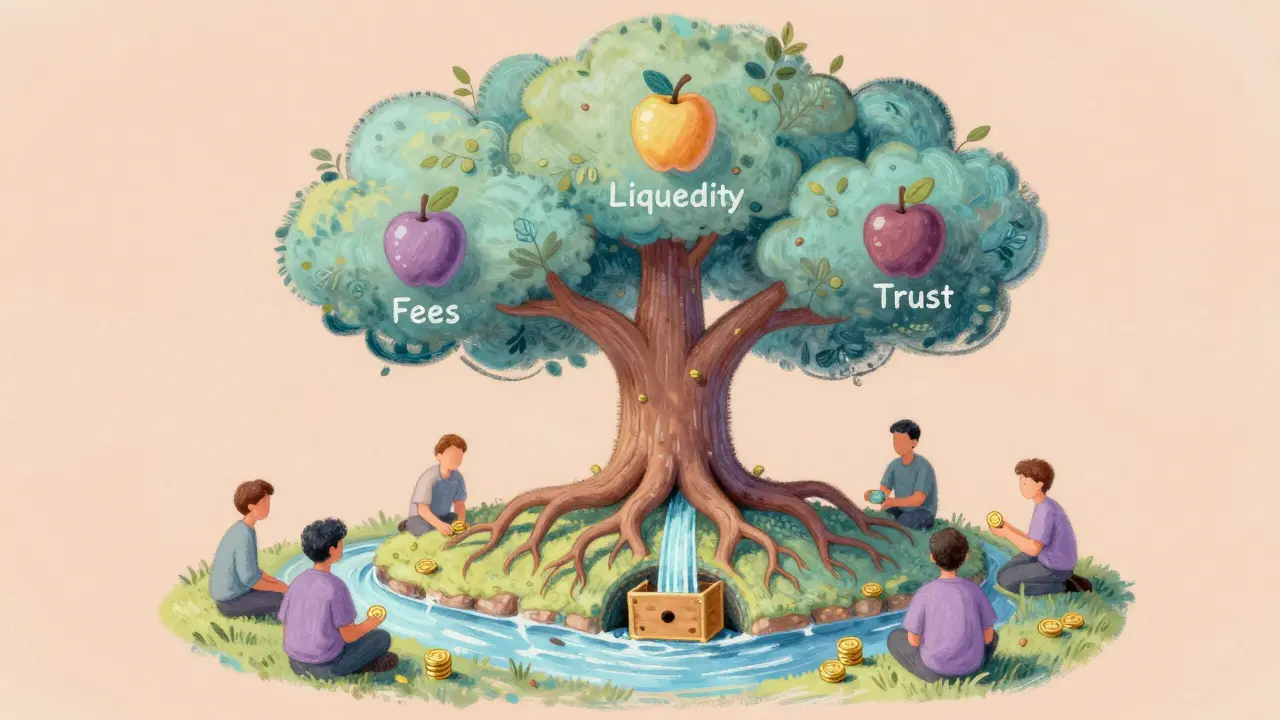
The smartest projects today aren’t choosing between sustainability and yield. They’re combining both.
Take Balancer. It uses a mix of fee-based revenue and carefully controlled token emissions. Its BAL token rewards liquidity providers, but only after the protocol has generated $100 million in fees. That means rewards are tied to real performance.
Or consider Synthetix. It doesn’t just pay yield - it lets users stake SNX to mint synthetic assets. The fees from trading those assets fund staking rewards. It’s a closed loop: usage → fees → rewards → more usage.
These models are scalable because they’re self-sustaining. They don’t need a constant stream of new investors. They thrive on real demand.
Why This Matters Beyond Your Wallet
This isn’t just about your portfolio. It’s about the future of DeFi.
When unsustainable yield farming dominates the space, it drags down trust in the whole ecosystem. Regulators see these crashes and assume all DeFi is a gamble. Investors walk away. Institutions stay out. Innovation stalls.
Sustainable yield farming, on the other hand, builds something lasting. It attracts real users, not speculators. It creates infrastructure that can support real-world use cases - lending, trading, insurance, asset tokenization.
The projects that survive the next bear market won’t be the ones with the flashiest APYs. They’ll be the ones that earned their way.
Can sustainable yield farming still offer good returns?
Yes - but they’re different. Sustainable protocols rarely offer 200%+ APYs. Instead, they offer steady, reliable returns between 5% and 15% annually, backed by real revenue. Over time, these often outperform high-yield scams because they don’t collapse. The key is patience. You’re not chasing a quick win - you’re building long-term value.
Is token inflation always bad?
Not always - but it has to be controlled. Some protocols use small, predictable token emissions to bootstrap liquidity or reward early contributors. The difference is transparency and alignment. If emissions are tied to usage milestones - like reaching $1 billion in TVL - and are reduced over time, they can be sustainable. If emissions are endless and designed to keep users hooked, they’re not.
What’s the safest way to start yield farming?
Start with well-established protocols that have been live for over a year, have audited smart contracts, and generate revenue from fees - not token emissions. Aave, Curve, and MakerDAO are good examples. Avoid anything promising over 50% APY with no clear revenue source. Always check the tokenomics page. If it’s confusing, it’s probably risky.
Do all high-yield projects fail?
No - but the vast majority do. A few, like early-year Compound or Yearn, used high APYs as a temporary launch strategy and successfully transitioned to fee-based models. But these are exceptions. Most high-yield projects are designed to be short-term. If you’re looking for long-term returns, treat high APYs like a warning sign - not a green light.
How do I know if a protocol has real revenue?
Look at the blockchain data. Use tools like DeFiLlama or Dune Analytics. Check if the protocol’s revenue (fees collected) matches its reward payouts. If the rewards are higher than the revenue, it’s being funded by token inflation. If revenue consistently exceeds rewards, it’s sustainable. Also, check if the treasury is growing over time - that’s a strong sign of health.
The next time you see a yield farm promising moon-like returns, ask yourself: Is this building something that lasts - or just burning through fuel to go fast? The best DeFi doesn’t need to explode. It just needs to endure.


yo i just staked in this new farm with 800% apy and like... its already down 60% in 3 days lmao. i thought crypto was supposed to be easy money. why does everything feel like a scam now?? 🤡
Sustainable yield farming isn't just a strategy-it's a paradigm shift. When you align incentives with protocol revenue streams, you create network effects that compound. Think of it as value accrual via fee capture, not token dilution. The protocols that win long-term are the ones that internalize economic activity, not externalize risk. This is DeFi maturity.
Aave and Curve are the OGs for a reason. No hype. Just fees. I'm in.
You're conflating revenue with utility. Most of these protocols don't generate real revenue-they generate token emissions disguised as yield. The fact that you think Aave's fee structure is 'sustainable' is naive. Their treasury is a vanity metric. Real value comes from adoption, not accounting tricks.
It is imperative to acknowledge that the fundamental architecture of decentralized finance necessitates a rigorous evaluation of incentive alignment. The presence of non-dilutive reward mechanisms is not merely preferable-it is a prerequisite for systemic integrity. One must interrogate the source of yield with academic precision.
i love how this post just says 'look at aave and curve' like they're the only two projects ever. what about dodo? or lyra? or even sushiswap? there's nuance here. not everything black and white. 🌈
The entire premise of this article is dangerously oversimplified. You cite Chainalysis data as if it's gospel, yet ignore that 83% of the failed protocols were launched after centralized exchanges delisted their tokens. The real issue isn't sustainability-it's regulatory suppression. The market doesn't fail. It's killed. And you're blaming the farmers for being hungry.
Let’s be brutally honest. You don’t care about sustainability. You care about not losing money. You call it 'regenerative farming' because it sounds better than 'this token is barely worth gas fees.' The truth? 95% of DeFi users are yield hunters. They don’t read whitepapers. They chase APY. The system isn’t broken-it’s working exactly as designed. For the whales. Not you.
i just started with 5% apy on curve and honestly? i feel like i'm winning. no stress. no panic dumps. just chillin. 🌿
You know who benefits from 'sustainable yield'? The VC-backed teams who already dumped their tokens before launch. The real story? Every 'fee-based' protocol has a backdoor liquidity bootstrapping clause in the smart contract. They just hid it under 'governance voting.' This whole thing is a shell game. Wake up.
OMG YES 🥹💖 this is why i left 300% apy farms last year. i cried when my $200 became $12... but now i'm earning $15/month from curve and i don't lose sleep. it's not sexy but it's mine. 🫶
The notion that fee-based models are inherently superior ignores the reality of liquidity bootstrapping. Without initial token emissions, no one shows up. No liquidity. No trading. No fees. The entire argument is circular. The real innovation isn't avoiding emissions-it's timing them with network growth. Most of these so-called sustainable protocols only became viable after they'd already burned through 80% of their token supply. You're romanticizing a post-mortem.
i think its cool how some people just want to make money fast and others want to build something that lasts. both are valid. i just wish we stopped calling one 'smart' and the other 'stupid'. we're all just trying to survive this mess
In India we have something called 'chit funds'. Same thing. 500% return for 3 months then vanish. You call it DeFi. We call it life. The only difference? You have a whitepaper.
I’ve analyzed 200+ protocols over the last 3 years. The ones that survive are the ones with three things: 1) transparent fee distribution on-chain, 2) a treasury that grows quarterly, 3) emissions that taper off after TVL hits a milestone. Most don’t even disclose #1. If you’re using DeFiLlama and can’t trace the fee-to-reward ratio in under 60 seconds, you’re gambling. And yes-Aave and Curve are still the gold standard. But don’t sleep on Frax or Pendle. Their fee-based staking is quietly revolutionary.
i’ve been farming on aave since 2020. i didn’t get rich. but i didn’t lose everything either. and i still have my tokens. that’s the win.
Sustainability is a bourgeois fantasy. Capitalism does not reward patience. It rewards extraction. The only reason Aave survives is because it was funded by venture capital with a 12-month exit window. The 'fee-based model' is a marketing narrative. The real value lies in control of the blockchain layer-not in yield distribution. You’re mistaking a facade for a foundation.
so you're saying the best way to not lose money is to earn 5%... and wait? bro. i came here for the moon. not a retirement plan. 🤷♂️