

Consumer Protection for Crypto in Japan: Rules, Restrictions, and Safeguards

Many people worry about losing money in cryptocurrency. It's a valid concern when headlines scream about hacks and failed exchanges. But have you ever wondered which country actually keeps the safest hands on its digital currency markets? The answer often points to Japan.
In Japan, Cryptocurrency operates under one of the strictest regulatory frameworks in the world. This isn't just about stopping scams; it is about ensuring that when you deposit your assets, they remain yours even if an exchange collapses. Since the major overhaul in 2025, the landscape has shifted to prioritize investor recovery speed above all else. With over 12 million registered accounts holding more than 5 trillion yen in deposits, the stakes for getting this right are incredibly high.
The Guardians of Your Digital Assets
Who is actually watching out for you? It isn't the police or the general public prosecutor. The primary authority sits with the Financial Services Agency, commonly known as the FSA. They treat crypto not as a wild-west frontier, but as a financial service that demands rigorous oversight.
This agency oversees two main pillars of legislation. First, there is the Payment Services Act (PSA) which governs the operational side of exchanges. Then, you have the Financial Instruments and Exchange Act (FIEA) which covers the asset classification and trading aspects. Together, they form a safety net designed to catch falling markets before consumers get hurt.
To operate legally in Japan, any platform offering crypto transactions must register as a Crypto-Asset Exchange Service Provider (CAESP). You won't find underground operators here. If a company isn't registered, they are operating illegally. The penalty for running an unregistered exchange isn't just a slap on the wrist. Under the amended PSA, operators face up to three years in prison or fines reaching 3 million yen. Starting from June 2025, these penalties shifted to "confinement punishment," ensuring the state retains control over offenders while streamlining the justice process.
Where Does Your Money Actually Live?
Let's talk about your cash and coins. When you put money into a Japanese exchange, where does it go? A key rule of the Payment Services Act mandates the segregation of funds. Your personal deposits cannot be mixed with the company's operating capital. This means if the exchange goes bankrupt, creditors cannot touch customer funds to pay off corporate debts.
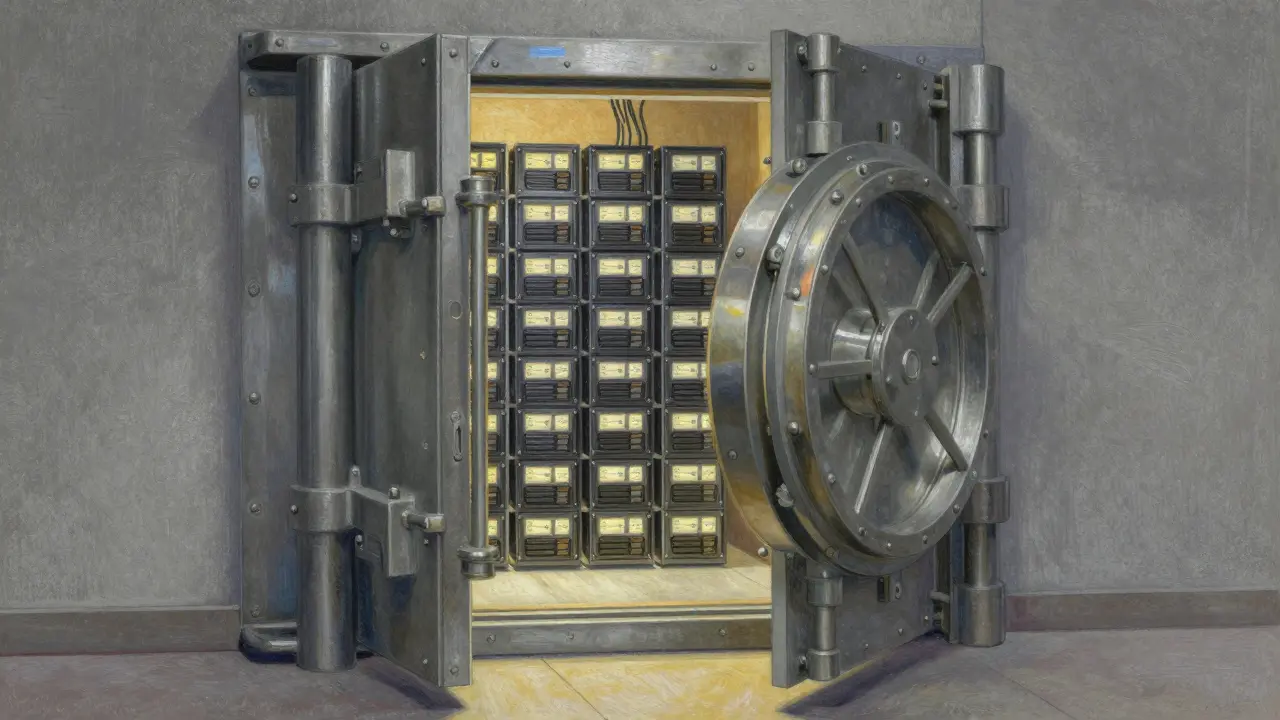
But paper promises aren't enough in the digital age. That is why the most critical rule involves storage security. Registered exchanges must keep at least 95% of user assets in offline cold wallets. Think of these as physical hard drives kept in secure vaults, disconnected from the internet. This requirement drastically reduces the risk of cyberattacks. Even if a hacker breaches the network, the bulk of your Bitcoin or Ethereum remains unreachable because it exists in a different environment entirely.
| Requirement | Detail |
|---|---|
| Fund Segregation | User funds must be separate from company funds to prevent misappropriation. |
| Cold Storage | Minimum 95% of assets stored offline (air-gapped systems). |
| KYC & AML | Mandatory identity verification and anti-money laundering checks for all users. |
| Capital Reserves | Exchanges must hold sufficient capital reserves to maintain stability during shocks. |
The 2025 Refund Revolution
You might wonder: what happens if the worst occurs? In the past, if an exchange failed, recovering your money was a nightmare. It involved government-led proceedings that could drag on for months, sometimes exceeding 170 days before you saw a single penny returned. That changed dramatically with the Payment Services Act amendment in 2025.
This update introduced a game-changer: direct refund options. Now, when funds are secured via bank guarantees or trust agreements, banks and trust companies can return those assets directly to users without waiting for traditional court-appointed liquidators. This slashes the waiting time significantly. For an average investor, knowing that recovery can happen through standard banking channels rather than bureaucratic limbo provides immense peace of mind.
Furthermore, the government can issue specific orders to retain assets within Japan if necessary for consumer protection. This prevents exchanges from secretly moving liquidity overseas right before shutting down. The authorities monitor these movements closely, especially regarding Electronic Payment Instrument Service Providers (EPISPs).
Tokens Changing Clothes: The FIEA Shift
Not all digital assets are created equal, and Japan knows it. One confusing area for many is understanding what exactly counts as a regulated asset. The definition has tightened considerably to distinguish between simple currencies and investment products. As of June 2025, the FSA formally began moving certain tokens under the Financial Instruments and Exchange Act (FIEA).
Why does this matter to you? If a token is classified as having "investment-like features" or governance rights, it moves into the securities bucket. This brings stronger disclosure rules. Issuers must publish detailed information about their projects, similar to a traditional stock listing. It also allows regulators to crack down on insider trading and market manipulation more effectively. This shift bridges the gap between old-school finance and new blockchain technology, giving retail investors clearer pathways to report fraud.
Specifically, the framework excludes "currency-denominated assets" like prepaid e-money cards from crypto regulations. These remain under standard payment laws. This ensures that your digital gift card doesn't get tangled up in complex crypto reporting requirements. It maintains clarity between spending tools and investment vehicles.

Payment Methods and Extra Protections
Japan also covers bases beyond just buying coins. What if you want to use a credit card linked to your crypto holdings? The regulations extend here too. If an exchange issues credit cards with installment plans or revolving payments, they trigger additional rules under the Installment Sales Act.
They must register as "credit purchase intermediaries." This forces them to provide mandatory customer information, explaining interest rates and repayment terms clearly. It stops predatory lending practices from hiding behind a crypto wrapper. While this adds paperwork for companies, it protects you from taking on debt you don't fully understand.
Looking Ahead: DeFi and Cross-Border Rules
The technology isn't standing still, and neither is the law. The FSA established a DeFi Study Group that meets regularly with industry experts and academics. Their goal? To figure out how to regulate decentralized platforms without killing innovation.
Smart contracts pose unique challenges because there is no central boss to sue. However, the dialogue ensures future laws account for code-based enforcement. Meanwhile, discussions continue on cross-border collection services. As global adoption grows, Japan aims to balance allowing innovation with preventing jurisdiction shopping by bad actors.
With these layers of defense, the Japanese market offers a unique blend of openness and safety. It recognizes that 70% of its users are middle-income earners expecting long-term gains. By protecting this demographic from reckless losses, the government supports sustainable growth. Whether you are investing locally or internationally, understanding these safeguards helps you see Japan not just as a market, but as a benchmark for financial security.
Are crypto exchanges in Japan safe to use?
Yes, generally speaking. Exchanges must register with the Financial Services Agency (FSA) and comply with strict rules, including keeping 95% of assets in offline cold wallets. This makes them safer than unregulated platforms elsewhere.
What happens if my exchange goes bankrupt?
Under the 2025 amendments, funds are usually secured via bank guarantees or trusts. This allows for direct refunds to users much faster than before, often cutting the wait time from months to weeks, avoiding lengthy court proceedings.
Does the government track my crypto trades?
Japanese law requires strict Know Your Customer (KYC) and Anti-Money Laundering (AML) procedures. Your identity is verified upon sign-up, and transaction data is monitored to prevent illegal activity, though private trade history remains secure unless flagged for review.
Can I still buy new tokens easily?
New tokens must meet specific listing standards. If a token resembles a security, it falls under the FIEA, requiring issuers to disclose more information. This might limit some speculative launches but improves overall project transparency.
Is it legal to trade without registering with the FSA?
No. Operating an unregistered crypto-asset exchange business is a criminal offense punishable by up to three years in prison or significant fines. Always verify the platform has a registration number listed on the FSA website.





OMG this is literally the scariest thing ive ever read about losing money online!!!
The regulatory framework here is incredibly robust! It really protects everyone!! Especially the cold wallet rules!!! You must appreciate this level of security!!!
I always felt so worried about putting funds into exchanges but reading about the FSA oversight makes me feel much safer knowing someone is watching out for us.
This comprehensive update on the Payment Services Act highlights a massive shift in how digital assets are treated globally. We need to recognize that the 2025 amendment fundamentally altered the bankruptcy proceedings for exchange failures. Before this change, users waited indefinitely for court liquidation processes to finalize asset returns. Now the direct refund options via bank guarantees provide immediate relief during crises. This mechanism ensures liquidity remains accessible without bureaucratic delays holding investors hostage. Segregation of funds is another non-negotiable element that prevents corporate debt from encroaching on customer balances. Keeping ninety-five percent of holdings in offline cold storage significantly mitigates hacking risks. Cybercriminals often target hot wallets but cannot access air-gapped systems easily. The introduction of confinement punishment for operators adds a severe deterrent against unregistered businesses. Unlicensed platforms face prison time instead of minor fines now. This deters opportunists from setting up fraudulent exchanges to steal capital. KYC and AML procedures ensure transparency while maintaining necessary privacy boundaries. Classification changes under the FIEA bring clearer definitions for investment tokens. Issuers must disclose detailed project information similar to traditional stock listings. Insider trading crackdowns are possible due to these stricter reporting requirements. Even credit card integration with crypto wallets is now regulated under installment sales acts. Predatory lending cannot hide behind blockchain terminology anymore. Decentralized finance discussions continue through the DeFi Study Group regularly. Authorities are trying to balance innovation with consumer protection standards. Middle-income earners represent seventy percent of the user base according to recent data. Protecting this demographic ensures sustainable market growth rather than reckless speculation. Cross-border collection services are being discussed to prevent jurisdiction shopping. The Japanese model serves as a benchmark for financial security worldwide.
While some may view these restrictions as excessive I firmly believe strict regulation is the only path to legitimacy. Without such rigorous standards the industry would devolve into chaos entirely. Investors deserve better than wild west scenarios where funds vanish overnight. The penalties for illegal operations must remain harsh to deter bad actors. Any platform bypassing these rules should be shut down immediately without mercy. We cannot afford to compromise financial stability for the sake of unrestricted innovation.
The distinction between currency-denominated assets and investment products is quite interesting technically.
Japan leads the world in crypto safety protocols.
Absolutely correct! It is absolutely amazing!!! The safety measures are undeniable!!! Everyone should trade here!!
i think its pretty cool how they separate the funds but hope i dont need to recover anything soon tho
Yes it is nice that you do not lose everything if things go wrong.
Just make sure you check the FSA registration site before signing up anywhere new.
The FSA is actually part of a larger surveillance net designed to track every transaction made by citizens abroad. They claim it is for safety but it enables total state control over digital wealth flows. EPISPs monitor movement of liquidity overseas to prevent jurisdiction shopping which sounds like preventing sovereignty challenges. The government retains power to confiscate assets locally if deemed necessary for national interest. This centralized grip on decentralized tech contradicts the core ethos of blockchain freedom. Smart contracts pose unique challenges because there is no central boss to sue yet they still want enforcement. DeFi Study Groups are likely planning ways to neutralize anonymous protocol interactions systematically. They aim to regulate code-based enforcement mechanisms to strip away pseudonymity features completely. Future laws will account for state-backed overrides in distributed ledger technology. Global adoption grows but Japan aims to prevent bad actors rather than protect rights. This narrative ignores how the elite benefit most from restricted market access. Innovation dies when bureaucracy decides what counts as an investment vehicle properly.
You are misunderstanding the intent of the regulations entirely. The goal is consumer protection not surveillance of personal life choices. Surveillance is mandated by international anti-money laundering standards adopted globally. Every country requires KYC verification to prevent illicit financial activities on their soil. The FSA does not track private trade history unless flagged for review during audits. Confusion arises from mixing banking secrecy with cryptocurrency reporting requirements. Bank guarantees secure funds rather than exposing user identities to the public. Trust agreements allow refunds without waiting for lengthy court appointments. This system benefits legitimate traders who fear theft more than privacy concerns. Critics focus on freedom while ignoring the cost of fraud on average investors. The state has no incentive to seize working capital unless crimes occur. Regulation exists to maintain order within financial markets specifically. Your conspiracy theories lack evidence supporting active malicious intent behind policies. Transparency reports from the FSA show low seizure rates compared to global norms. Focus on actual asset safety rather than unfounded fears regarding control.
Seeing how different cultures approach money matters is fascinating especially in East Asian markets.
This is so great for peace of mind 😊💰 The 95% cold storage rule is amazing! We should copy this everywhere 📈🇺🇸
agree totally it feels secure knowing rules exist for our safety.
It is encouraging to observe that governments are finally taking action to support retail investors. Perhaps we will see a stabilization of the sector if these models are adopted elsewhere.
The geopolitical implications of these regulatory frameworks cannot be overstated given the current economic climate. Japan has effectively established a sovereign advantage in digital asset infrastructure over competitors like the United States. Their aggressive push for cold storage mandates forces offshore entities to either comply or leave entirely. This reduces foreign interference in domestic financial stability metrics significantly. Capital reserves requirements act as a bulwark against volatile market shocks originating externally. The Financial Instruments and Exchange Act reclassifies tokens to align with traditional securities law principles. This harmonization allows regulators to utilize existing litigation precedents effectively against violators. Insider trading crackdowns become feasible when issuers disclose detailed project data publicly. Market manipulation attempts are harder to execute under such rigorous disclosure obligations. The penalty structures serve as a clear warning to criminal syndicates operating gray markets. Three years in prison for unregistered operation is a sentence many will not risk lightly. Confinement punishment ensures the justice system retains maximum control over offenders efficiently. Banks return assets directly to users bypassing slow judicial recovery processes entirely. This shift accelerates capital recycling back into the economy during distress events. Electronic Payment Instrument Service Providers are monitored for cross-border liquidity movements constantly. Preventing secret moves to foreign jurisdictions maintains domestic tax revenue streams intact. The DeFi Study Group works to anticipate future technological shifts proactively. Code-based enforcement mechanisms are being developed to counteract decentralized evasion tactics. Cross-border collection services aim to stop bad actors from jumping legal jurisdictions casually. Sustainable growth relies on protecting middle-income earners who drive local consumption patterns. Seventy percent of users belong to this demographic expecting long-term gains safely. Innovation must not come at the expense of basic consumer rights or financial security. The benchmark status of Japan attracts institutional capital seeking stable regulatory environments.
the regulatory arbitrage theory holds weight here. liquidity trapping mechanisms reduce systemic risk exposure. trust agreements improve settlement velocity during defaults. institutional capital favors clarity in classification standards.
We cannot allow greedy corporations to exploit people like this happens in unregulated zones. It is morally wrong to let exchanges gamble with client savings carelessly.
totally agree greedy co rporations need more oversight rules to protct us fr om scams and loss.
Onle the elited understand these complex financial instruments properly. Common investors shouls realize their ignorance limits their success prospects drastically. Ths system is desinged to favor those who comprehend fine print details completely.
Wow u guys are so smart talking about financial stuff im just scared of losing my bit coin lol
Analyzing the structural integrity of these safeguards reveals deeper flaws in assuming regulatory bodies act purely benevolently. The reliance on bank guarantees introduces counterparty risk into a system meant to eliminate intermediaries. Trust companies become single points of failure despite claims of enhanced security protocols. Direct refund options depend entirely on the solvency of the financial institutions backing the exchange initially. If the broader banking sector collapses these crypto assets lose their primary safety net instantly. Government orders to retain assets domestically could freeze legitimate international transfers arbitrarily. Monitoring movements by EPISPs grants excessive power to administrative agencies unchecked. Jurisdiction shopping prevention turns into export controls on digital currency technologies inadvertently. Discussion on DeFi regulation inevitably leads to centralized licensing of otherwise open protocols. The exclusion of prepaid e-money cards keeps legacy payment rails dominant over innovation. Smart contract enforcement debates ignore the reality that code execution cannot be paused easily. Legal frameworks struggle to address non-custodial wallet vulnerabilities without violating privacy norms. Retail investor protection rhetoric masks the consolidation of market power among registered providers. Higher barriers to entry reduce competition leading to monopolistic tendencies within the sector. Standardized listing criteria discourage experimentation with novel governance token structures. Recovery speed improvements are irrelevant if initial asset custody remains partially centralized. Penalties for unregistered exchanges are effective only against visible operators running physical offices. Offshore entities will simply cease operations rather than submit to draconian confinement punishments. The seventy percent demographic statistic ignores younger users who prefer high-risk speculative strategies. Middle-income expectations dictate policy directions that alienate the core crypto-native community.