

Crypto Trading vs. Payments in Vietnam: Understanding the 2025-2026 Legal Split

For years, if you held Bitcoin or Ethereum in Vietnam, you lived in a regulatory gray zone. You could buy it, sell it, and even use it to pay for things, but the government mostly looked the other way. That ambiguity ended abruptly in mid-2025. With the signing of Resolution No. 05/2025/NQ-CP is a five-year pilot program establishing strict rules for cryptocurrency trading and payments in Vietnam and the passage of the Digital Technology Industry Law is Vietnam's comprehensive legislation recognizing digital assets, NFTs, and virtual currencies under national law, the country has drawn a hard line in the sand. The core message is simple but complex in execution: trading is now legal and highly regulated, while using crypto as a direct payment method remains restricted.
If you are an investor, a business owner, or just someone with a wallet app on your phone, this distinction matters more than ever. The new laws don't just ban or allow crypto; they separate the act of speculating on asset prices from the act of spending money. Getting this wrong could mean everything from a fine to criminal charges. Let’s break down exactly what the law says about trading versus paying, and what you need to do before the January 2026 deadline.
The New Legal Definition of Crypto Assets
Before we can understand the rules, we have to understand what the government considers "crypto." Under the Digital Technology Industry Law, which took full effect on January 1, 2026, digital assets are no longer a vague concept. They are officially recognized property with civil protection. This means you can own them, trade them, and even inherit them. However, the law splits these assets into three distinct buckets, and each bucket has different rules.
First, there are virtual assets. Think of in-game currencies or points that only have value within a specific platform. These are largely ignored by financial regulators because they don’t function like money in the broader economy. Second, there are other digital assets, such as Non-Fungible Tokens (NFTs) and utility tokens. These represent ownership of a unique item or access to a service. Finally, and most importantly for our discussion, there are crypto assets. This category includes Bitcoin, Ethereum, and stablecoins. These are the assets that behave like money or investments, and they are the primary focus of Resolution 05/2025.
The law explicitly excludes securities and fiat currencies in digital form from this definition. Why does this matter? Because it separates crypto from traditional stocks and bank deposits. If you hold a token that acts like a stock, it falls under existing financial laws. If you hold Bitcoin, it falls under this new digital asset framework. This clarity was missing before, leading to confusion about whether buying Bitcoin was investing or gambling. Now, it is legally defined as trading a digital asset.
Crypto Trading: A Highly Controlled Market
The biggest shift in the new framework is how trading works. Previously, Vietnamese users traded on foreign exchanges like Binance or Coinbase without much oversight. Now, the government wants all trading to happen on licensed domestic platforms. But here is the catch: the barrier to entry for these platforms is incredibly high.
To operate a crypto exchange in Vietnam, a company must meet stringent requirements. The minimum capital requirement is set at 10 trillion VND, which is roughly USD 379 million as of late 2025. To put that in perspective, that is one of the highest capital thresholds for any crypto exchange globally. Furthermore, at least 65% of this capital must come from institutional investors, not individual entrepreneurs. Foreign ownership is capped at 49%, ensuring that Vietnamese entities maintain control over the infrastructure.
This structure effectively shuts out small startups and limits the market to large, well-capitalized financial institutions. The goal is stability and security, not rapid innovation. For traders, this means fewer options for where to buy and sell. You will likely see a handful of major banks or tech giants launching these platforms rather than dozens of niche exchanges. All transactions on these licensed platforms must be conducted exclusively in Vietnamese dong (VND). There is no direct crypto-to-crypto trading allowed on these regulated venues. You must convert VND to crypto, or vice versa. This fiat pairing requirement gives the state tight control over the flow of value.
The Payment Distinction: Can You Spend Your Crypto?
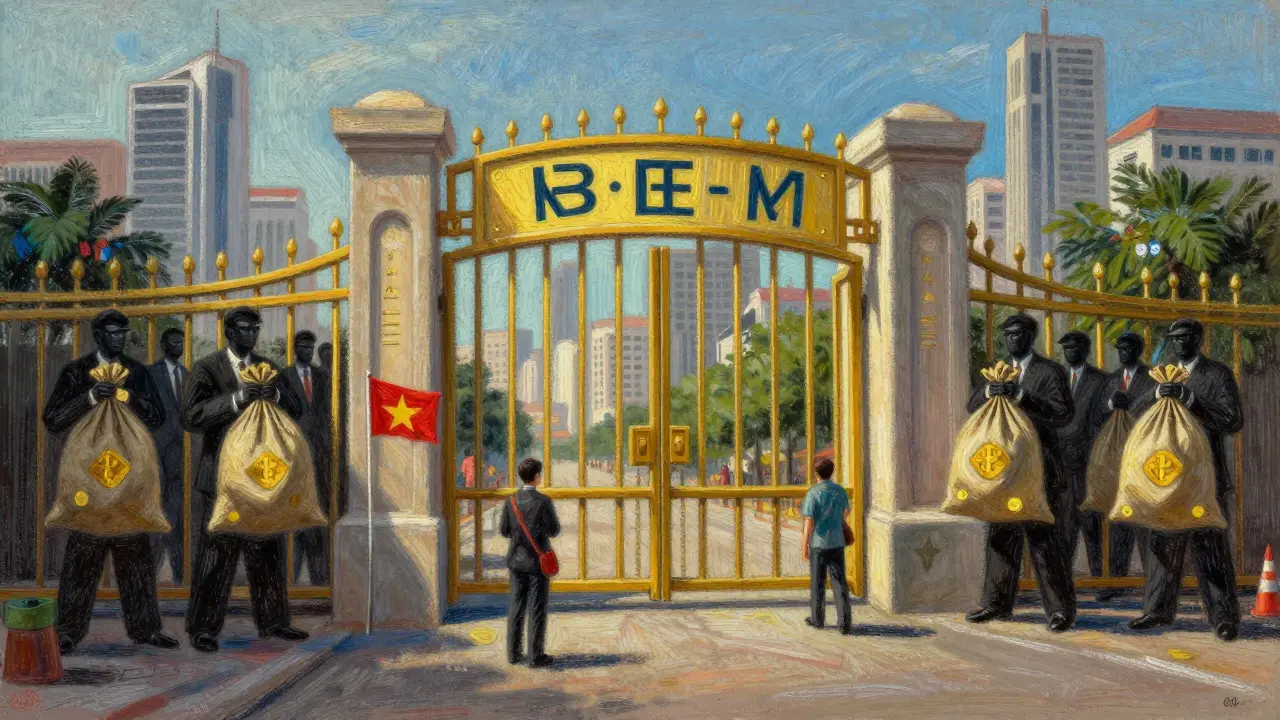
Here is where the distinction becomes critical. While trading is being built into a regulated cage, the use of crypto for payments is treated differently. Resolution 05/2025 addresses the "payment of crypto assets" as a distinct regulatory category, but the details are sparse. The prevailing interpretation among legal experts is that direct peer-to-peer payments using crypto are heavily restricted.
Because all trading must go through VND, using Bitcoin to buy coffee directly from a merchant is technically complicated. The merchant would need to accept the crypto, then immediately convert it to VND through a licensed channel to settle their accounts. Most businesses lack the infrastructure to do this compliantly. Therefore, while the law doesn’t explicitly ban holding crypto for personal use, it creates a friction-heavy environment for commercial transactions.
The Ministry of Finance is expected to release detailed guidance on tax regulations and payment use cases before the end of 2026. Until then, businesses should assume that accepting crypto as payment carries significant compliance risks. It is safer to treat crypto as an investment asset rather than a medium of exchange. If you try to use it as cash, you may find yourself outside the protective umbrella of the new laws.
The Timeline: What Happens Next?
The implementation of these laws follows a compressed timeline that leaves little room for error. Certain provisions of the Digital Technology Industry Law, particularly those related to funding and investment incentives, took effect on July 1, 2025. This was designed to jumpstart the industry by supporting startups and research in blockchain technology, including the launch of NDAChain, Vietnam’s national blockchain platform.
However, the heavy lifting begins on January 1, 2026. On this date, the full law comes into force. From this point forward, all crypto trading activities must comply with anti-money laundering and licensing requirements. The government has announced a six-month grace period after the issuance of the first exchange license. During this window, Vietnamese investors can migrate to licensed platforms. After this grace period ends, trading on unlicensed platforms will be considered illegal. Violators could face administrative fines or even criminal penalties.
This creates a massive logistical challenge. Estimates suggest there are around 20 million crypto users in Vietnam. All of them must switch to compliant platforms within a short timeframe. If you are still trading on a foreign exchange that hasn’t obtained a Vietnamese license, you are operating in a legal danger zone. The five-year pilot program runs until September 2030, giving the government time to adjust the rules based on market feedback. But for the next few years, the current strict framework is the law.
| Activity | Legal Status | Key Requirements | Risks |
|---|---|---|---|
| Trading on Licensed Platforms | Legal | Must use VND, KYC verification, platform must have 10T VND capital | Low, if fully compliant |
| Trading on Unlicensed Platforms | Illegal (after grace period) | None (but prohibited) | High: Fines, account freezes, potential criminal charges |
| Using Crypto for Payments | Restricted/Unclear | No explicit ban, but lacks clear regulatory support; VAT/tax implications unknown | Moderate: Compliance uncertainty, tax audits |
| Holding Crypto Assets | Legal | Recognized as property with civil protection | Low, provided acquisition was legal |
Impact on Investors and Businesses
For individual investors, the new rules mean less freedom but more security. You lose the ability to easily swap Bitcoin for Ethereum on a global exchange. Instead, you must go through a local platform that converts everything through VND. This adds steps and potentially higher fees. However, your assets now have legal standing. If an exchange goes bankrupt, you have clearer recourse than before. The high capital requirements for exchanges also reduce the risk of fraud, as only serious players can enter the market.
For businesses, the situation is more nuanced. If you run a startup looking for funding, the new laws offer incentives. The government is pushing blockchain as one of eleven priority technologies for national development. Grants and tax breaks may be available for companies building digital products. But if you are a retailer thinking about accepting Bitcoin, pause. The lack of clear payment regulations means you could face tax nightmares. Without official guidance on how to report crypto income, your accounting department will be guessing. It is wiser to wait for the Ministry of Finance’s detailed guidelines before integrating crypto payments.
The distinction between trading and payment also affects how you think about wealth management. In the past, many people used crypto to hedge against inflation or move money across borders. The VND-only trading rule makes cross-border transfers harder. You can’t easily send Bitcoin to a friend abroad and have them spend it locally without triggering scrutiny. The system is designed to keep value circulating within the Vietnamese financial ecosystem, under state supervision.

What About Mining?
A notable gap in the current regulatory framework is the treatment of crypto mining. The Digital Technology Industry Law and Resolution 05/2025 do not explicitly address whether mining is legal, restricted, or banned. This silence is deafening for miners who have operated in Vietnam for years. Some analysts believe that since the law focuses on trading and payments, mining might fall under general energy consumption regulations rather than financial laws. Others argue that without explicit permission, it remains in a gray area.
Given Vietnam’s history of power shortages and environmental concerns, it is unlikely that large-scale industrial mining will be encouraged. Small-scale home mining might continue unchecked, but professional operations should expect future regulations. Keep an eye on announcements from the Ministry of Industry and Trade, which oversees energy usage. Until then, miners operate at their own risk.
Navigating the Transition Period
As we approach the January 2026 deadline, here is what you should do. First, audit your current holdings. Are they on a platform that is likely to get a Vietnamese license? If not, start planning your exit strategy. Second, check your documentation. Ensure your identity verification (KYC) is up to date on any domestic platforms you use. Third, if you are a business, consult with a tax advisor who specializes in digital assets. Do not rely on general advice; the specifics of crypto taxation in Vietnam are still evolving.
The government’s approach is cautious yet progressive. They want the benefits of blockchain technology-transparency, efficiency, innovation-without the chaos of unregulated speculation. By separating trading from payments, they aim to control financial flows while allowing technological growth. Whether this balance works remains to be seen. But for now, the rules are clear: trade carefully, pay cautiously, and stay compliant.
Is crypto trading legal in Vietnam in 2026?
Yes, crypto trading is legal in Vietnam starting January 1, 2026, but only on licensed domestic platforms. Trading on unlicensed foreign exchanges will be considered illegal after a six-month grace period following the issuance of the first license. All trades must be conducted in Vietnamese dong (VND).
Can I use Bitcoin to pay for goods and services in Vietnam?
The legality of using crypto for payments is currently unclear and heavily restricted. While not explicitly banned, the lack of specific regulations and the requirement for VND-based trading make direct crypto payments difficult for businesses. It is recommended to treat crypto as an investment asset rather than a medium of exchange until further guidance is released.
What is the minimum capital required to open a crypto exchange in Vietnam?
To operate a licensed crypto exchange in Vietnam, a company must have a minimum capital of 10 trillion VND (approximately USD 379 million). At least 65% of this capital must come from institutional investors, and foreign ownership is capped at 49%.
When does the Digital Technology Industry Law take full effect?
The Digital Technology Industry Law takes full effect on January 1, 2026. Certain provisions related to funding and incentives began earlier, on July 1, 2025, to support industry growth ahead of the main implementation date.
Are there taxes on crypto gains in Vietnam?
Detailed tax regulations for crypto assets are expected to be released by the Ministry of Finance before the end of 2026. Currently, specific tax rates and reporting requirements are not fully defined, creating uncertainty for investors. It is advisable to consult a tax professional for personalized advice.
What happens if I trade on an unlicensed platform after the grace period?
Trading on unlicensed platforms after the six-month grace period is considered illegal. Penalties may include administrative fines, confiscation of assets, or criminal charges depending on the severity of the violation and the amount involved.