

EU Travel Rule Compliance for Crypto: What Zero Threshold Means in 2026
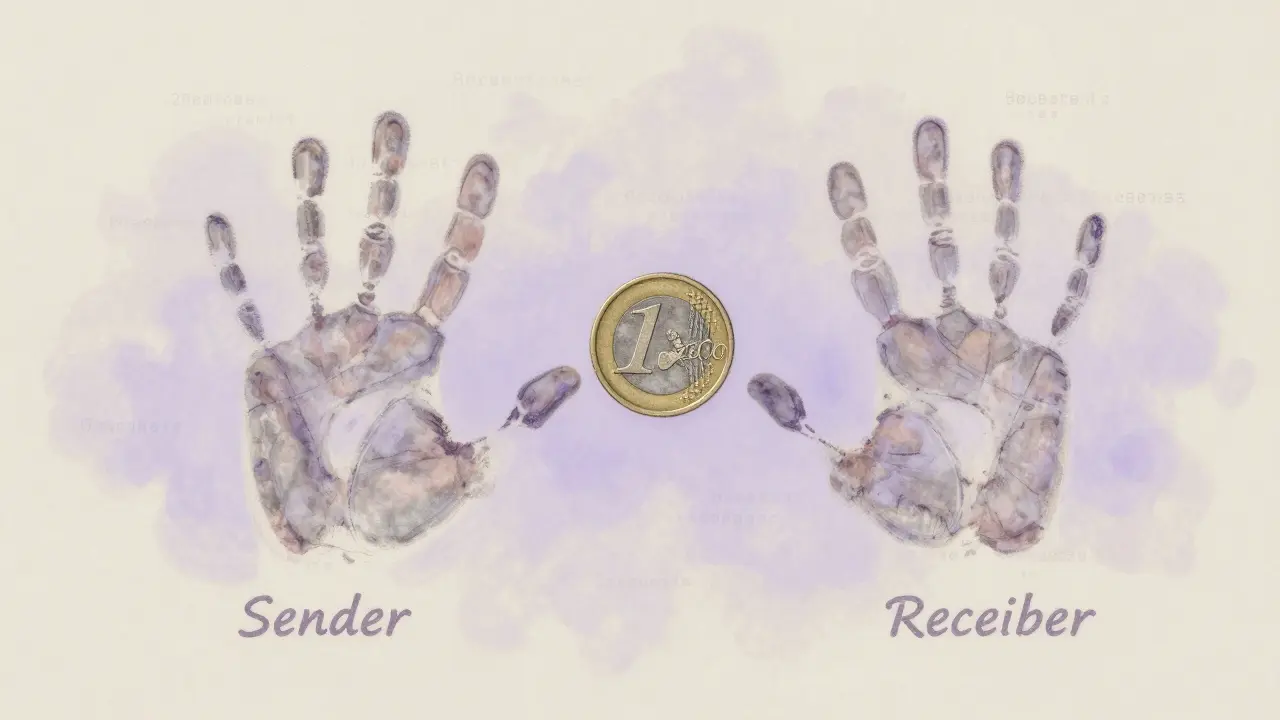
On December 30, 2024, something quietly changed for everyone using crypto in the European Union. If you sent even €1 from one exchange to another, that transaction now had to carry a full digital passport. No exceptions. No minimums. Not even for small payments between friends or casual traders. The EU’s Travel Rule went live with a zero threshold - meaning every single crypto transfer between regulated platforms must include sender and receiver details, no matter how tiny.
What Exactly Is the Travel Rule?
The Travel Rule isn’t new. It started in traditional banking decades ago, requiring banks to share customer info when transferring funds over $3,000. The FATF - the global money laundering watchdog - pushed crypto to follow suit. Most countries took the FATF’s original suggestion: apply the rule only to transfers above $1,000 or €1,000. The EU didn’t just follow. It rewrote the rule. Under Regulation (EU) 2023/1113 and MiCA (Regulation (EU) 2023/1114), the EU made it crystal clear: if you’re using a licensed crypto exchange or wallet provider in Europe, every transaction - even €0.01 - must include:- Full name of sender
- Account or wallet number
- Physical address or national ID number
- Full name of recipient
- Account or wallet number of recipient
Why Zero Threshold? The Logic Behind the Rule
Why go all the way to zero? The EU’s official reasoning is simple: crypto isn’t a safe haven from financial crime. By treating every transaction as potentially risky, regulators believe they can catch patterns others miss - small, repeated transfers that might be used to launder money, fund terrorism, or hide stolen assets. But here’s the twist: the actual data doesn’t back it up. Studies from Chainalysis and the European Central Bank show that crypto-related illicit activity is far lower than in traditional banking. Less than 0.1% of all crypto transactions involve crime. Meanwhile, billions move through banks every day with far less scrutiny. So why the zero threshold? One theory is that the EU wants to set the global standard. By being the strictest, it positions itself as the leader in crypto regulation. Another reason? Political pressure. After high-profile scandals involving crypto mixers and ransomware payments, regulators felt they had to act decisively - even if the action was more symbolic than practical. The truth? It’s less about catching criminals and more about control. The EU wants full visibility into every movement of value on its soil. If you’re using crypto in Europe, you’re now under a digital microscope.How Do Exchanges Handle This?
Before December 2024, most EU exchanges had a grace period - 18 months - to build systems that could handle this flood of data. Now, every platform must have:- A secure way to send and receive transaction data with other CASPs
- Automated checks to verify sender and recipient identities
- Real-time AML screening to flag known bad actors
- Systems to store all data for at least five years
- Protocols to handle missing or incomplete data
What Happens When You Send Crypto to a Non-EU Exchange?
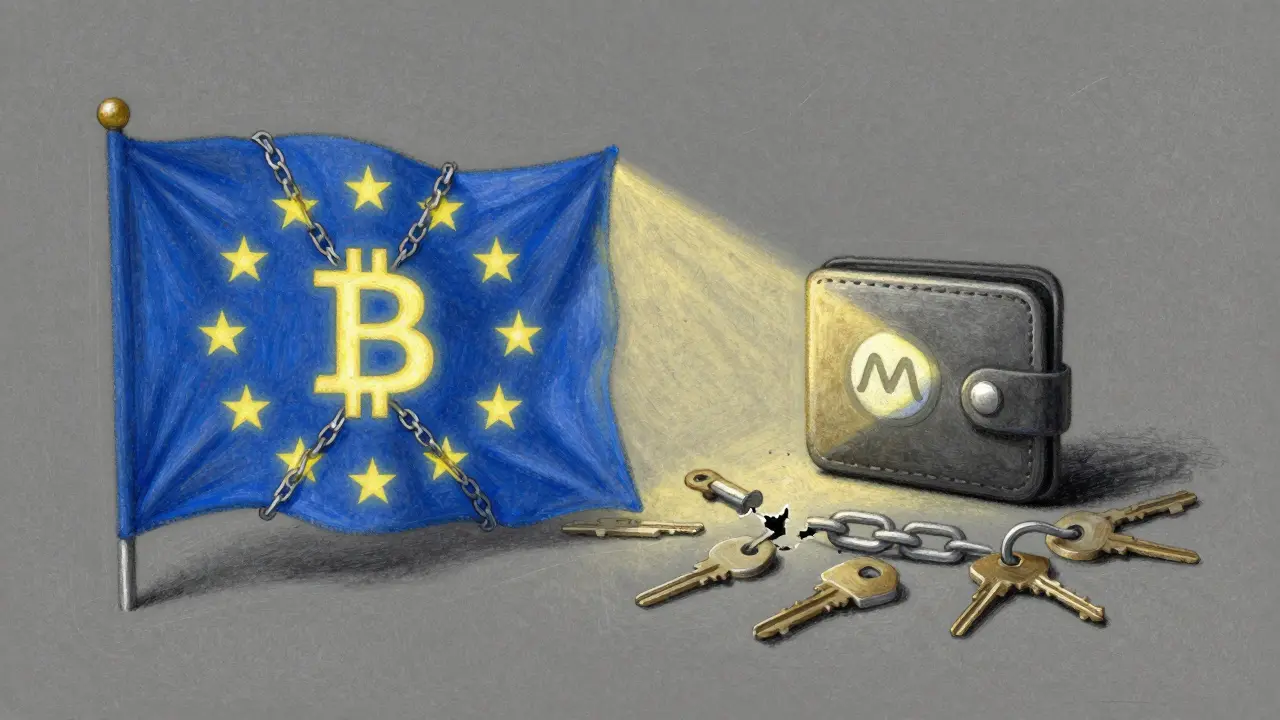
This is where things get messy. The EU rule only applies when both sides are regulated under MiCA. If you send crypto from an EU exchange to Coinbase (US), Binance (offshore), or a private wallet in Singapore, the EU system can’t force the other side to comply. That creates a big loophole - and a risk. The European Banking Authority (EBA) classifies transactions to non-compliant jurisdictions as high-risk. So even if you’re sending €50 to Coinbase, your EU exchange will treat it like a red flag. They might delay the transfer, ask for extra proof of identity, or even block it entirely. Many users have reported delays or failed transfers when sending to non-EU platforms. Some exchanges now require users to confirm they’re not sending to unregulated entities. Others simply refuse to process those transfers at all. The result? A two-tiered crypto world. Inside the EU, everything is tracked. Outside, it’s a Wild West. And if you’re trying to move between the two, you’re the one who pays the price.What About Private Wallets and DeFi?
Here’s the big exception: if you’re sending crypto from your own wallet - say, from MetaMask to another personal wallet - the Travel Rule doesn’t apply. That’s because you’re not using a regulated CASP. The same goes for decentralized exchanges (DEXs) like Uniswap or Curve. No KYC, no identity checks, no data sharing. But here’s the catch: if you use a centralized exchange to buy crypto, then send it to a DEX, you’re still leaving a trail. The exchange knows you sent it. The DEX doesn’t. But if you later cash out back into an EU exchange, they’ll see the incoming funds came from a non-compliant source. That could trigger a manual review. You might be asked: “Where did this crypto come from?” That’s why many EU users are now avoiding DEXs entirely. Or they’re using bridge services that claim to anonymize transfers - which, ironically, might make them look even more suspicious to regulators.What If You’re Not in the EU?
If you’re outside the EU, this rule doesn’t directly affect you. But it still matters. Why? Because most major crypto platforms have EU subsidiaries. If you use Kraken, Binance, or Coinbase, you’re likely interacting with their EU-licensed arm - even if you live in Australia, Canada, or Brazil. That means: if you send crypto to someone in Germany, or receive crypto from someone in Italy, your transaction might get caught in the EU’s net. Your exchange may ask you for ID, address, or even proof of funds - even if you’re not an EU resident. It’s becoming a global ripple effect. The EU isn’t just regulating its own market. It’s pushing its rules onto the rest of the world.
What Are the Real Consequences?
For casual users? It’s mostly invisible. You click “Send,” wait a few extra seconds, and your crypto moves. But behind the scenes, your data is being logged, checked, and stored. For businesses? It’s expensive. One mid-sized EU exchange told me they spent over €2 million on compliance tech in 2024. That includes software, legal teams, auditors, and staff training. Smaller platforms? Many shut down. Others merged. The EU’s zero-threshold rule has already pushed dozens of small crypto firms out of the market. For privacy advocates? It’s a nightmare. Your transaction history is no longer yours. It’s owned by the exchange, stored in their databases, and potentially shared with authorities. Even if you’re doing nothing illegal, your behavior is now monitored. And here’s the kicker: there’s no appeal. If an exchange blocks your transfer because of missing data, you can’t fight it. You can’t ask for a review. You just get a message: “Transaction declined due to regulatory requirements.”What’s Next?
The EU isn’t done. In 2026, regulators are already looking at expanding the rule to cover:- Stablecoin transfers between private wallets
- Non-custodial wallets connected to exchanges
- Staking and yield farming platforms
- Tokenized assets like real estate or stocks on blockchain
What Should You Do Now?
If you’re in the EU:- Use only licensed exchanges - they’re the only ones compliant
- Keep your ID and address info updated in your exchange account
- Don’t send crypto to unregulated platforms unless you’re ready for delays or blocks
- Save records of all transactions - you might need them later
- Understand that privacy is gone. If you want anonymity, don’t use EU-regulated services
- Be aware that your transactions might still be caught in the EU’s net
- Check if your exchange has an EU entity - they’re likely enforcing the rule
- Don’t assume your private wallet is safe. If you cash out to an EU exchange later, they’ll ask questions
Does the EU Travel Rule apply to all crypto transactions?
No. It only applies to transfers between regulated Crypto Asset Service Providers (CASPs) in the EU. If you send crypto from your personal wallet to another personal wallet, or to a non-EU exchange, the rule doesn’t apply. But if you use a licensed EU exchange like Kraken or Bitstamp, every transfer - even €0.01 - must include full sender and receiver details.
What happens if a transaction is missing required data?
The receiving exchange can choose to accept, reject, return, or freeze the transaction based on its risk assessment. If the sender’s platform repeatedly fails to provide data, the receiver must cut ties and report them to regulators. This is mandatory - not optional.
Can I avoid the Travel Rule by using a non-EU exchange?
You can, but it’s risky. If you send crypto from an EU exchange to a non-EU platform, your EU exchange will treat it as a high-risk transaction. You may face delays, extra verification steps, or even a full block. Some exchanges now refuse to process such transfers at all.
Does this rule apply to DeFi and private wallets?
No. DeFi platforms like Uniswap and private wallets like MetaMask are not regulated under MiCA. But if you later cash out to an EU exchange, they may ask where the funds came from - especially if the source is a non-compliant wallet. That could trigger a manual review.
Is the zero threshold unique to the EU?
Yes. The EU is the only major jurisdiction with a €0 threshold. The U.S. uses $3,000, the UK is at £1,000, and most other countries follow the FATF’s original €1,000 guideline. The EU’s approach is the strictest in the world - and it’s setting a new global standard.
What are the penalties for non-compliance?
Penalties include fines up to 5% of annual turnover, suspension of trading licenses, forced closure of operations, and criminal liability for executives. Repeated failures to report non-compliant counterparties can lead to exclusion from the EU crypto market entirely.





EU thinks it's the world's police. 🤡
So let me get this straight... you're telling me sending €0.50 to your buddy for pizza now requires a notarized affidavit? 🤔 Maybe next they'll ask for your blood type too.
The regulatory framework established by Regulation (EU) 2023/1113 represents a paradigmatic shift in financial oversight, predicated upon the principle of comprehensive transactional transparency. This is not merely compliance-it is epistemological governance.
Man, I just wanted to send my cousin $2 for coffee... now I gotta fill out a form like I'm applying for a mortgage? 😅 This is wild.
The EU is setting a precedent. Other regions will follow. This isn't about crime. It's about control.
this is so sad 😢 i just wanted to send my friend some dogecoin for his bday... now its like a bank heist
Let’s be real-this isn’t about crime. It’s about making crypto as boring and monitored as your bank account. They don’t want you to be free. They want you to be predictable. And frankly? That’s terrifying.
While the intent of regulatory oversight is understandable, the execution of a zero-threshold policy raises profound questions regarding proportionality and technological feasibility. A measured approach would better serve both innovation and public safety.
i think its too much but i get why they did it
You guys don’t get it. This is the beginning. They’re watching EVERYTHING. Soon they’ll track your thoughts. 😈
Big Brother is using crypto to get us. This is the New World Order. They want to own your money. And your soul. Mark my words.
Honestly, if you’re sending crypto to avoid taxes or launder money, yeah, you deserve to get caught. But punishing every grandma sending €1 to her grandkid? That’s just cruel. And stupid.
So the EU banned freedom... again. Congrats. You made crypto as fun as filing your taxes.
I understand the rationale, but the practical impact on small users is disproportionate. The system is not designed for the individual-it’s designed for the institution.
We can do better than this! Crypto was supposed to be free, not another bureaucracy with extra steps. Let’s push for smarter rules, not harsher ones!
The zero-threshold compliance architecture is a non-negotiable component of the MiCA regulatory stack. Any deviation introduces systemic AML vulnerabilities. This isn't opinion-it's architecture.
i just want to send my friend a few bucks without jumping through 10 hoops 😭 i miss the old days...
Privacy isn’t dead. It’s just moving off-chain. The real crypto community will adapt. The system will fracture. And the EU will be left managing a ghost.
The EU’s approach is not merely overzealous-it is fundamentally anti-libertarian. By imposing universal identity verification on micro-transactions, they are not securing the system-they are eroding the very foundation of decentralized value exchange. This is not regulation. It is digital feudalism.
There’s a difference between transparency and surveillance. The EU crossed that line. And once you normalize watching every penny, you normalize watching everything else.
This is a global standard in the making. The EU leads by example. We must align with responsible innovation.
Zero threshold? More like zero common sense. They’re not catching criminals-they’re catching teenagers sending memes as crypto.
Regulation is not the enemy of innovation. It is the scaffolding upon which sustainable innovation is built. This is not overreach. It is responsibility.
i used to love sending crypto to friends... now i just use cash. feels weird but safer 😅
If you’re not hiding anything, why complain? This is just good hygiene. 🙄