

Legal Status of Cryptocurrencies in Russia: What’s Allowed and What’s Not in 2026

As of 2026, owning cryptocurrency in Russia is legal-but using it to buy coffee, pay bills, or send money to a friend is not. The country has built a bizarre, two-tier system where only the wealthiest investors can legally trade crypto, while everyone else is stuck in a gray zone: you can hold Bitcoin, but you can’t spend it. And if you try? You could face fines, asset freezes, or even criminal charges.
How Russia Split Crypto Into Two Worlds
Russia’s approach to cryptocurrency isn’t about banning it outright. It’s about controlling it. The foundation was laid in 2021 with the On Digital Financial Assets is a Russian federal law that legalized tokenized securities and digital rights but explicitly excluded Bitcoin, Ethereum, and other decentralized coins from its scope. That law didn’t make crypto illegal-it just refused to recognize it as money. The government’s message was clear: digital assets are fine as investments, but they’re not currency. The real shift came in 2025, when the Bank of Russia is the central banking authority of Russia, responsible for monetary policy, financial stability, and oversight of financial institutions introduced a three-year experimental legal regime. This isn’t a blanket green light. It’s a VIP pass. Only those who meet the "especially qualified investor" standard can legally trade crypto. That means:- Individuals must have over ₽100 million ($1.1 million USD) in securities or bank deposits
- And earn at least ₽50 million ($550,000 USD) annually
- Companies must already qualify as "qualified investors" under Russian financial law
Why Russia Lets Big Players In-But Not You
You might wonder: why let anyone in at all? The answer isn’t about innovation or technology. It’s about sanctions. Since 2022, Western financial systems have blocked Russian banks from using SWIFT, frozen assets, and restricted access to global markets. In response, Russia turned to cryptocurrency-not for its citizens, but for its corporations. In 2025 alone, Russian companies used crypto to settle over ₽1 trillion ($11 billion USD) in international trade. That’s not a coincidence. It’s a workaround. Crypto became Russia’s secret trade channel. Oil, gas, metals, and grain exports to countries like India, China, Turkey, and the UAE now often move through crypto payments. The Bank of Russia didn’t stop it. It facilitated it. But only within the experimental regime. That means:- Only approved financial firms can handle crypto settlements
- All transactions must be reported to regulators
- Only cryptocurrencies like Bitcoin and Ethereum are permitted-no stablecoins unless approved
The Digital Ruble: Russia’s Answer to Bitcoin
While crypto thrives quietly for trade, the government is pushing its own version of digital money: the digital ruble is a central bank digital currency (CBDC) developed by the Bank of Russia, set to launch publicly in September 2026, designed to replace cash and compete with private cryptocurrencies. Unlike Bitcoin, the digital ruble is fully controlled by the state. Every transaction is tracked. Every wallet is tied to identity. There’s no anonymity. No decentralization. Just efficiency-and surveillance. The digital ruble isn’t meant to replace crypto. It’s meant to replace you using crypto. The government wants you to pay for groceries with a state-backed app, not a wallet full of Bitcoin. By September 2026, when the digital ruble goes live, the message will be clear: Our money is legal. Yours isn’t.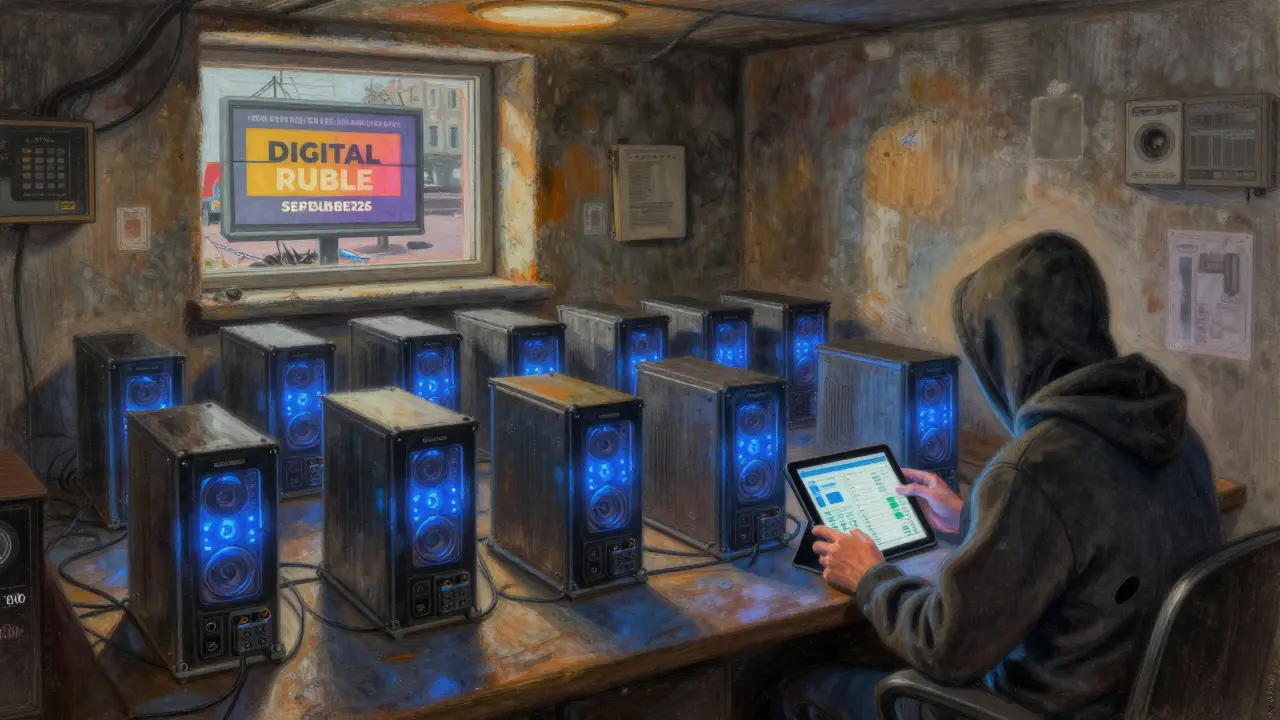
What You Can and Can’t Do in Russia Right Now
Here’s the real breakdown of what’s allowed and what’s not:| Activity | Legal? | Who Can Do It |
|---|---|---|
| Own Bitcoin or Ethereum | Yes | Everyone |
| Buy crypto on a Russian exchange | No | Only "especially qualified" investors |
| Use crypto to pay for goods or services | No | Never |
| Sell crypto for rubles | Yes (but risky) | Everyone, but not officially recognized |
| Trade crypto derivatives (futures, options) | Yes | Only qualified investors |
| Mine Bitcoin | Yes | Everyone |
| Send crypto to someone in Russia | No | Only if both parties are qualified investors |
| Use crypto for international trade | Yes | Only approved companies |
The Underground Crypto Economy
Despite all the rules, crypto is alive in Russia. Not in banks. Not on exchanges. But in Telegram groups, peer-to-peer apps, and cash trades in parking lots. People use P2P platforms are peer-to-peer trading services that allow users to exchange crypto directly without a central intermediary, often used in countries with strict financial controls like LocalBitcoins and Paxful to buy Bitcoin with rubles. Some even use crypto to send money abroad-bypassing the banking system entirely. The government doesn’t police this. Not directly. But it doesn’t have to. The threat is enough. If you’re caught using crypto to pay for a car or a vacation, you could be accused of violating currency control laws. Penalties include fines up to 200% of the transaction value, asset seizure, and in extreme cases, criminal prosecution. The result? A thriving black market for crypto that’s never mentioned in official reports. The $40 billion figure? That’s just what’s visible. The real number is likely higher.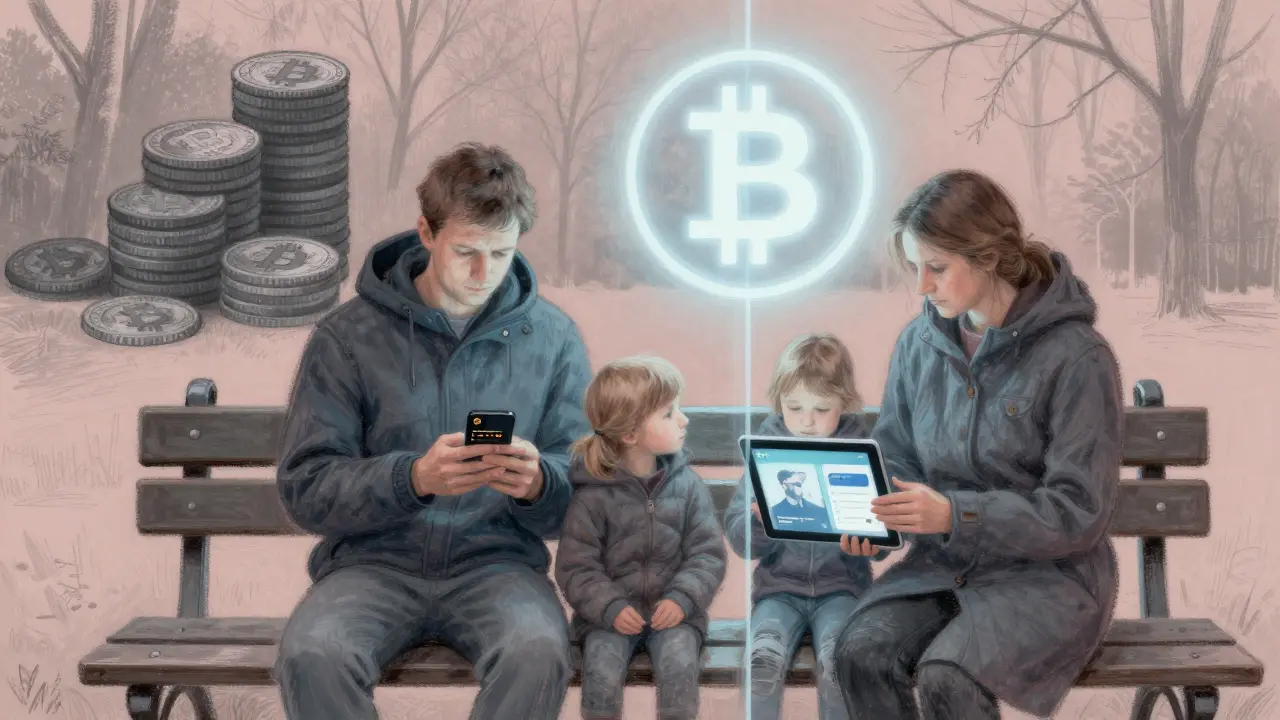
What’s Next? The Battle Between the Treasury and the Central Bank
There’s a quiet war inside the Russian government. On one side: the Bank of Russia is the central banking authority of Russia, responsible for monetary policy, financial stability, and oversight of financial institutions. They want crypto locked down. Tight. Controlled. They call it a "financial risk" and say it threatens the ruble. On the other side: the Russian Treasury is the government body responsible for managing state finances, budgeting, and fiscal policy, including the development of digital asset strategies. They see crypto as a tool. A weapon, even. Deputy head Ivan Chebeskov has openly pushed for a national digital asset strategy that would expand access to crypto for businesses and even middle-class investors. In September 2025, the Treasury recommended easing the qualified investor rules. That’s a signal. Maybe the government is thinking: if we can’t stop crypto, maybe we should let more people in-on our terms. But the Bank of Russia hasn’t budged. And until they do, nothing major will change. The experimental regime expires in 2028. Will it be extended? Expanded? Scraped? No one knows. But one thing is certain: Russia will not allow decentralized crypto to challenge the digital ruble. The state’s money will win. Always.Final Reality Check
Russia’s crypto rules aren’t about safety. They’re about control. The government doesn’t fear Bitcoin. It fears what Bitcoin represents: a system outside its reach. That’s why only billionaires can trade it. That’s why you can’t use it to pay your rent. And that’s why the digital ruble is coming-because the state wants to own your money, not just regulate it. If you’re in Russia and you hold crypto? You’re not breaking the law. But you’re not protected by it either. If the government decides to crack down tomorrow, your wallet has no legal standing. No recourse. No rights. And if you’re outside Russia? Don’t assume this is just a local quirk. This is a model. A blueprint. Other countries facing sanctions, inflation, or political instability may copy it. Crypto isn’t banned. It’s reserved. And the rich get to play.Is it legal to own Bitcoin in Russia?
Yes. Owning Bitcoin or any other cryptocurrency is not illegal in Russia. You can buy, hold, and store it in a personal wallet. However, you cannot use it to pay for goods or services, sell it through regulated exchanges unless you qualify as a highly qualified investor, or transfer it to another Russian resident. The law recognizes ownership but denies usage.
Can I use crypto to pay for things in Russia?
No. Using cryptocurrency for any domestic payment-whether for groceries, rent, or services-is strictly prohibited. The Russian ruble (and soon, the digital ruble) is the only legal tender. Businesses that accept crypto for payments risk fines, license revocation, or criminal charges under currency control laws.
Can I mine Bitcoin in Russia?
Yes. Mining has been legal since 2014 and is treated as an economic activity, not a financial transaction. However, new regulations require miners to register with authorities, report energy consumption, and pay special fees. Large-scale mining operations must also comply with environmental and infrastructure rules.
What is the digital ruble, and when will it launch?
The digital ruble is Russia’s official central bank digital currency (CBDC), designed to replace cash and compete with private cryptocurrencies. It is fully controlled by the Bank of Russia, with every transaction tracked and linked to identity. Public rollout is scheduled for September 2026, following years of testing with banks and government agencies.
Can foreigners use crypto in Russia?
Foreigners can hold crypto while in Russia, but they cannot use it for payments or transactions within the country. Foreign companies may use crypto for international settlements under the experimental regime, but only if they are approved by the Bank of Russia and comply with reporting requirements. Individuals without qualified investor status have no legal access.
What happens if I get caught using crypto illegally in Russia?
Penalties vary based on the offense. For individuals, using crypto for domestic payments can lead to fines up to 200% of the transaction value, asset seizure, or administrative detention. For businesses, penalties include license revocation, tax audits, and criminal charges under currency control laws. Repeat offenses or large-scale violations may trigger investigations by Rosfinmonitoring (Russia’s financial intelligence unit).
Is crypto trading taxed in Russia?
Yes. Profits from crypto transactions are subject to personal income tax (13% for residents). However, since most trades are unofficial, reporting is rare. The government has started requiring exchanges and qualified investors to report trades. Mining income is also taxable. Failure to report can lead to back taxes, penalties, and interest.
Can I send crypto to someone in Russia?
Technically, you can send crypto to a Russian wallet. But if the recipient is not a qualified investor, and they use or convert it within Russia, they risk violating currency control laws. The law doesn’t ban receiving crypto-but it bans using it. So while the transfer itself isn’t illegal, what happens after it is.
Are stablecoins legal in Russia?
No. Stablecoins like USDT or USDC are not recognized or permitted under current law. The Bank of Russia has explicitly warned against them, calling them a high-risk tool for circumventing sanctions. While some Russian companies use them for international trade, they do so outside the legal framework. Any official use would require new legislation, which has not been passed as of 2026.
Will Russia ever allow ordinary people to use crypto?
Not likely. The government’s goal is not to empower citizens-it’s to control money. The digital ruble is the future. Crypto will remain a tool for elite investors and sanctioned trade, not personal finance. Any expansion of access will be limited to qualified investors and tightly regulated instruments, not open markets.





so we got a country where you can own bitcoin but can't buy a coffee with it?? lol
that's like owning a Ferrari but only being allowed to park it in your driveway and admire the paint job
absolute chaos. i love it. 🤣
I find it fascinating how Russia has managed to turn cryptocurrency into a luxury good - like caviar for the elite. The irony? They're using it to bypass sanctions while telling their own citizens to 'wait your turn.'
Meanwhile, the digital ruble is just state surveillance with a blockchain sticker on it. 🤷♀️
There's something deeply poetic about a nation that lets its people hold digital gold but forbids them from spending it.
It's not about control of money - it's about control of hope.
When you can't even use your own wealth to buy bread, you stop believing in systems.
And that? That’s the real revolution.
Not Bitcoin.
But the quiet, underground refusal to be owned.
Let’s break this down properly. Russia didn’t ban crypto - they created a tiered financial apartheid. The 100 million ruble threshold isn’t about financial literacy - it’s about exclusionary gatekeeping disguised as regulation.
Meanwhile, mining is legal because it consumes energy and creates industrial output - not because it’s 'economic activity' but because the state needs the electricity load to justify power plant investments.
And the digital ruble? It’s not a currency - it’s a behavioral tracking system with a user interface. Every transaction gets logged, tagged, and analyzed. You think you’re paying for groceries? No. You’re submitting a report to the Ministry of Finance.
Also - stablecoins are banned not because they’re risky - but because they’re untraceable. The state doesn’t fear decentralization. It fears anonymity.
This is a masterclass in statecraft. Russia has turned crypto into a tool for elite economic warfare while simultaneously demonizing it as a threat to social stability.
Brilliant. Cold. Calculated.
The digital ruble isn’t meant to compete with Bitcoin - it’s meant to replace the idea that money can exist outside the state’s gaze.
And honestly? It’s working.
People still act like this is some kind of 'freedom' issue? Nah. This is just Russia being smart. You think the average joe should be able to gamble with Bitcoin while the state’s trying to stabilize the ruble? Please.
They let the rich play with it because the rich don’t care about inflation - they just want to move money. Meanwhile, you and me? We’re not allowed to ruin the system with our 'decentralized dreams.'
Stop crying. This isn’t oppression. It’s economics.
Let’s be clear: this isn’t regulation. It’s ideological purification.
The Bank of Russia is terrified not because Bitcoin is volatile - but because it’s a symbol. A symbol that money doesn’t need permission.
That’s why they allow mining - it’s extractive, measurable, taxable. But peer-to-peer transfers? That’s anarchism with a wallet.
And the digital ruble? It’s not a currency. It’s a digital leash. Every transaction gets a timestamp, a location, a behavioral profile.
They don’t want to control crypto.
They want to erase the idea that it ever existed.
I’ve been watching this for years. What’s happening in Russia isn’t unique - it’s predictive.
Every authoritarian state is watching this model. The US? The EU? They’re not far behind.
They’ll call it 'financial stability.' They’ll call it 'anti-money laundering.'
But in 10 years? We’ll look back and say: 'That’s when they took our money from us.'
You don’t need to ban crypto.
You just need to make it useless to everyone except the people who already own everything.
The digital ruble is the logical endpoint of central banking. A state-controlled, blockchain-backed, fully traceable, identity-locked, algorithmically monitored, tax-compliant, compliance-enforced, surveillance-integrated, permissioned, regulated, KYC-verified, AML-compliant, Fed-approved, IMF-recognized, G20-sanctioned, BIS-endorsed, politically neutral, economically stable, socially harmonious, universally adopted, frictionless, seamless, efficient, modern, next-generation digital currency.
And it’s terrifying.
Let’s be honest - this whole system is a joke.
They let billionaires trade crypto but ban ordinary people from using it? That’s not policy - that’s class warfare dressed in regulatory clothing.
And mining? Oh, sure, go ahead and burn 2000 watts of electricity to mine Bitcoin - as long as you file Form 7B-22 with the Ministry of Energy and pay the 'green crypto fee.'
It’s not about control.
It’s about extraction.
And the digital ruble? Just another tax collection tool with a fancy UI.
So you can own Bitcoin but not spend it. That’s like having a key to a vault but not being allowed to open it. Weird. But also kinda beautiful? Like a silent protest.
I’m not even mad - I’m heartbroken.
They took away our money. Not with guns. Not with tanks. But with forms. With thresholds. With 'qualified investor' labels. With bureaucratic silence.
And now we’re left with this hollow shell of a system - where the rich get to play with digital gold while the rest of us are told to 'be patient' and 'wait for the digital ruble.'
But the digital ruble isn’t freedom.
It’s a prison with a user-friendly app.
This is not unique to Russia. The global trend is clear: centralized digital currencies will replace decentralized ones. The state will always win. Because power does not surrender. It adapts.
They’re scared. Not of Bitcoin. Of what it represents: choice. Autonomy. The idea that you don’t need permission to own something.
And that’s why they’re building the digital ruble - not to replace cash.
To replace the human desire to be free.
Russia is doing what every great power does - weaponizing finance. The West tried to isolate them. So they built a parallel system. Crypto for trade. Ruble for citizens. It’s genius. Brutal. Effective.
Don’t cry for the people who can’t spend Bitcoin.
Cry for the people who still think money should be free.
There’s a quiet beauty in how this all unfolded.
People still mine. Still trade in parking lots. Still send crypto through Telegram.
The state didn’t crush it.
It just made it invisible.
And maybe that’s the point.
Because when something is forbidden but still alive?
It becomes sacred.
This is a lesson in how power works.
You don’t need to outlaw something to control it.
You just need to make it inaccessible.
Make it expensive.
Make it exclusive.
And then tell everyone it’s for their own good.
That’s how empires survive.
Not with force.
With fine print.
Interesting model. Russia is showing the world that you can have crypto without chaos. Controlled access. Legal clarity. Economic utility. It’s not perfect - but it’s functional.
The digital ruble is coming. And it’s not the enemy.
It’s just another tool.
Use it. Or don’t.
Either way - you’re still free to choose.
I’ve lived in three countries. Never seen anything like this.
It’s not a ban.
It’s a filter.
And the filter is designed to let only the right people through.
That’s not policy.
That’s sociology.
The irony is thick enough to slice.
They’re using crypto to bypass sanctions - while simultaneously criminalizing its use by ordinary citizens.
So the state gets to launder oil with Bitcoin - but if you send your cousin $500 in ETH to help with rent? That’s a criminal offense.
Class war. Financial version.
And they’re winning.
The digital ruble isn’t a currency - it’s a confession. Every transaction is a surrender. Every payment, a plea of compliance. The state doesn’t want to control money.
It wants you to beg for it.
So Russia’s solution to sanctions is to create a two-tier crypto economy where only the rich can play and everyone else gets a digital leash?
Brilliant.
Just… brilliant.
It’s like they took every dystopian novel and turned it into policy.
And honestly? I’m impressed.
I don’t know if I’m more scared of the digital ruble…
or the fact that I kinda get why they did it.