Wrapped MistCoin (WMC) Explained: History, Tokenomics & How to Trade
Jonathan Jennings
Self-Sovereign Identity: Control Your Digital Identity Without Middlemen
When you sign up for a crypto exchange, you hand over your ID, a selfie, and sometimes even your bank statement. That data? It’s not yours anymore. Self-sovereign identity, a system where you alone control your digital identity without relying on centralized authorities. Also known as decentralized identity, it flips the script: instead of proving who you are to every platform, you carry your verified credentials in a wallet you own. This isn’t theory—it’s already being tested in real-world crypto compliance, from exchanges needing KYC to governments exploring digital IDs.
Self-sovereign identity works by storing verified claims—like your age, citizenship, or passport number—as encrypted tokens on a blockchain. You don’t upload your driver’s license to a server. You show a cryptographically signed proof that you’re over 18, without revealing your birthdate or address. This is why projects like Phala Network, a privacy-focused blockchain that enables secure data computation, and Wicrypt, a decentralized Wi-Fi network that rewards users for sharing access are experimenting with it. Even KYC, the identity verification process required by most crypto platforms to prevent fraud and comply with regulations, is starting to shift. Instead of each exchange doing its own KYC, you complete it once, then share the proof wherever needed. That’s the promise: less duplication, less risk, less data leaks.
But here’s the catch: most people still don’t use it. Why? Because it’s not baked into the apps they know. Right now, platforms like Upbit, TRIV, and BCEX Korea still demand you upload documents directly to them. That’s why the posts below don’t talk about self-sovereign identity in theory—they show you where it’s already breaking through. You’ll see how self-sovereign identity connects to real cases: how Tunisia’s crypto ban forces underground users to seek privacy tools, how OFAC sanctions make identity verification a minefield, and why exchanges like WX Network and Biteeu are quietly building systems that reduce reliance on centralized KYC. This isn’t about tech buzzwords. It’s about who owns your data—and whether you can ever get it back.
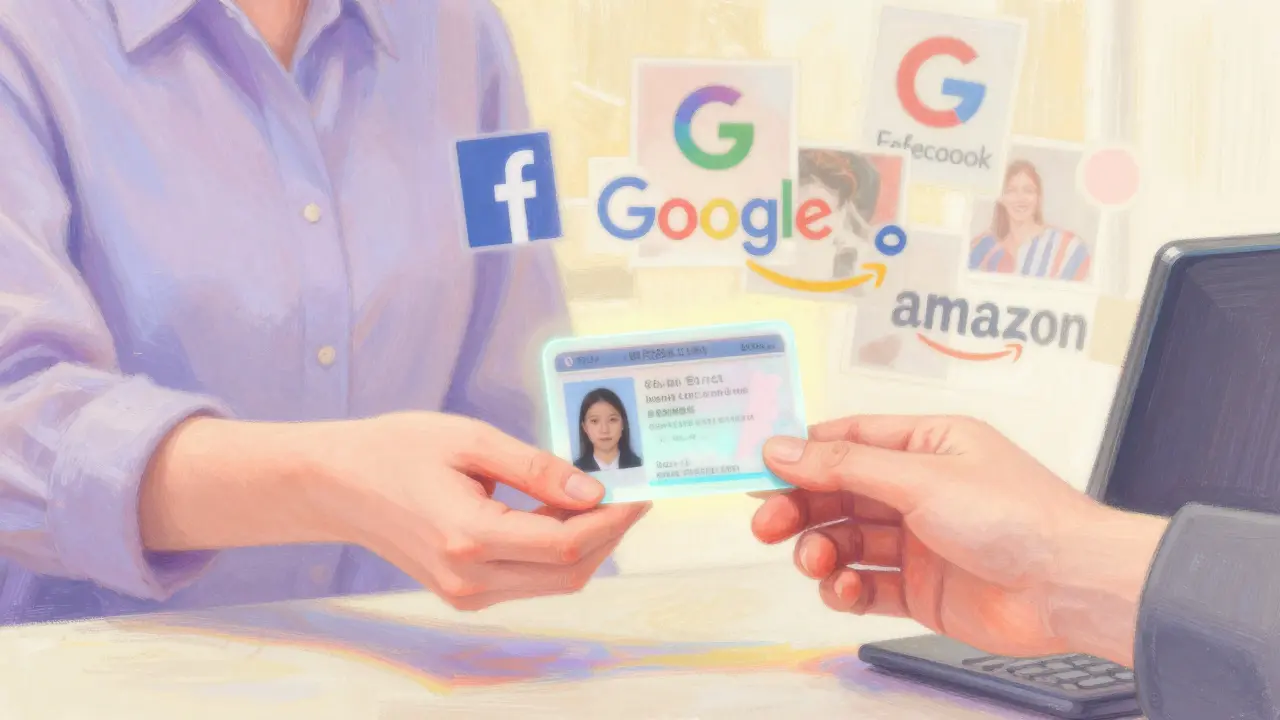
Self-sovereign identity on blockchain lets you own your digital identity instead of letting companies like Google or Facebook control it. Learn how DIDs, verifiable credentials, and blockchain work together to give you real privacy and control.
Jonathan Jennings Dec 16, 2025
Digital identity NFTs are blockchain-based credentials that let you own and control your online identity. No more passwords, no more repeated KYC. Learn how they work, where they're used, and why they're changing the internet.
Jonathan Jennings Dec 2, 2025