
Unlicensed Crypto Mining in Iran: IRGC Involvement and Energy Crisis

Imagine a country where the lights go out for hours every day. Factories shut down. Homes sit in darkness. Meanwhile, miles away, massive server farms hum with power, churning out Bitcoin without paying a dime for electricity. This isn’t a dystopian novel; it’s the reality of unlicensed cryptocurrency mining in Iran. The driver behind this operation? The Islamic Revolutionary Guard Corps (IRGC), a powerful military and political organization in Iran that controls significant portions of the economy.
The story of crypto mining in Iran is not just about digital currency. It’s about survival under sanctions, state-sponsored theft of national resources, and a shadow economy that fuels regional conflicts. By 2019-2020, the IRGC had transformed mining from a niche tech hobby into a strategic tool for bypassing international financial restrictions. Today, we’ll break down how this ‘crypto cartel’ operates, why it matters to global markets, and what it means for the average Iranian citizen.
How the IRGC Built a Crypto Cartel
To understand the scale of this operation, you need to look at who pulls the strings. The IRGC didn’t stumble into crypto mining by accident. Under direct orders from Supreme Leader Ali Khamenei, the group systematically entered the sector to compensate for losses in traditional dollar channels due to U.S. and EU sanctions. They turned mining into a sanctioned-sanctioned revenue stream.
The blueprint was simple: leverage Iran’s cheap electricity and partner with foreign hardware suppliers. A prime example is the 175-megawatt Bitcoin mining farm in Rafsanjan, Kerman Province. Nominally, this was a joint venture between an IRGC-affiliated enterprise and Chinese investors. In reality, it was a state-backed fortress designed to generate hard currency while operating outside civilian oversight. These farms are often hidden inside special economic zones or military bases, places where civilian regulators rarely tread.
The numbers tell a stark story. Estimates suggest there are approximately 180,000 active mining devices in Iran. About 80,000 are in private hands. That leaves roughly 100,000 units-more than half the total capacity-under the control of state or quasi-state organizations. This isn’t just participation; it’s domination.
The Role of Bonyads and State Foundations
You can’t talk about the IRGC’s wealth without mentioning Bonyads, large charitable trusts in Iran that operate as major economic entities with significant tax exemptions and political influence. These religious foundations act as the financial arm of the regime. One of the most prominent is Astan Quds Razavi, a massive foundation overseeing the Imam Reza shrine in Mashhad, which holds vast real estate and industrial assets.
Astan Quds Razavi and similar bonyads have formed what investigators call a de facto ‘cryptocurrency monopoly group.’ They profit by accessing subsidized electricity rates that private citizens never see. Some reports indicate these entities simply refuse to pay utility bills entirely, relying on their political connections and armed protection to avoid consequences. This creates a two-tiered system: one tier for the state, which mines freely, and another for the public, which pays high tariffs and faces blackouts.
| Feature | Licensed Private Miners | Unlicensed IRGC/Bonyad Operations |
|---|---|---|
| Electricity Cost | High industrial tariffs | Subsidized or unpaid |
| Regulatory Oversight | Ministry of Industry, Mines, and Trade | Minimal to none (military zones) |
| Revenue Handling | Must sell to Central Bank of Iran | Retained for proxy funding/sanctions evasion |
| Hardware Access | Limited by import restrictions | Direct partnerships with foreign firms (e.g., China) |
Energy Theft and the Civilian Impact
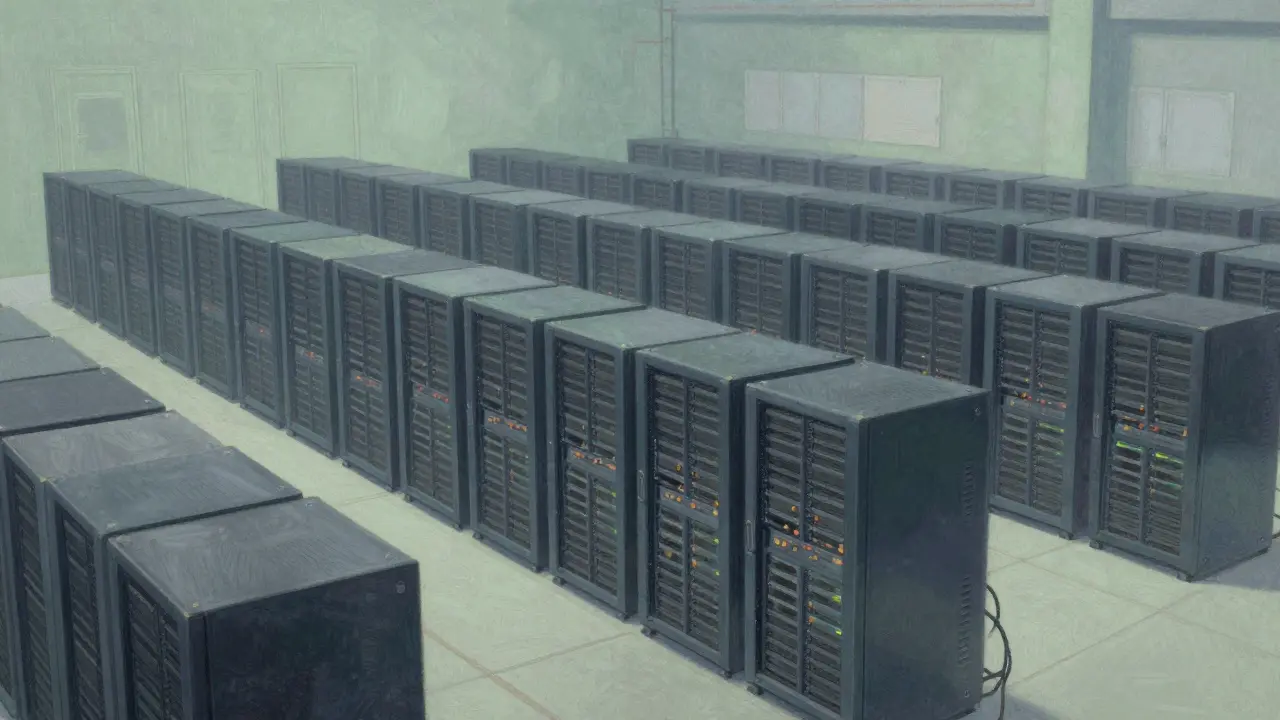
The cost of this operation isn’t just financial; it’s physical. Iran’s energy grid is strained. During summer months, when demand peaks, the power grid collapses. Why? Because industrial-scale ASIC miners, specialized computers designed exclusively for mining cryptocurrencies, consuming vast amounts of electricity are running 24/7.
In 2022, the Iranian parliament passed legislation allowing the military to establish private power plants and transmission lines. On paper, this might sound like infrastructure development. In practice, it enabled the IRGC to redirect public electricity resources intended for cities and industries toward secret mining farms. Energy Minister Ali Abadi, himself a former IRGC commander, acknowledged the severity of the issue. He likened unauthorized crypto mining to “putting a hand in others’ pockets” and called it “an ugly and unpleasant theft.”
Consider the irony: the man tasked with fixing the energy crisis has deep ties to the organization causing it. This conflict of interest ensures that crackdowns on unlicensed mining are performative at best. While private miners face raids and fines, IRGC-linked operations continue uninterrupted, protected by the very institutions meant to regulate them.
Crypto as a Sanctions Evasion Tool
Why does the IRGC care so much about Bitcoin? Because it’s a lifeline under sanctions. Traditional banking channels are blocked. SWIFT transfers are monitored. But blockchain offers two key advantages: direct transactions and anonymity. You don’t need a bank intermediary. You don’t leave a clear audit trail. Two-way encryption allows parties to remain largely anonymous.
Blockchain analytics firms have identified Iran as one of the world’s major Bitcoin producers. The U.S. Treasury Department and Israeli intelligence have specifically targeted wallets tied to IRGC operations. These funds aren’t sitting idle; they’re used to finance proxy groups involved in regional conflicts across the Middle East. Crypto mining has become a vital tool for sustaining Iran’s geopolitical ambitions despite international pressure.
This dynamic creates a paradox. The same technology that promises financial freedom is being weaponized by a state actor to evade accountability. For global policymakers, this highlights the urgent need for better tracking mechanisms and cross-border cooperation in regulating crypto flows.
Regulatory Whiplash: Crackdowns and Loopholes
The Iranian government’s approach to crypto is inconsistent. In 2019, mining was officially recognized as legal, managed by the Ministry of Industry, Mines, and Trade. But the rules were designed to squeeze private operators. High energy tariffs and mandatory sales to the Central Bank of Iran (CBI), the central monetary authority of Iran responsible for issuing currency and managing reserves made profitability nearly impossible for independent miners.
Consequently, much of the industry went underground. The IRGC thrived in this gray area. Recent moves show a pattern of selective enforcement. On December 27, 2024, the CBI blocked all Iranian cryptocurrency-to-rial payments through internet websites within Iran. But by January 2025, the bank began selectively unblocking exchanges using its own API system. This system provides full access to user data, indicating the state wants to monitor and control activities rather than eliminate them.
For ordinary Iranians, this means navigating a complex web of restrictions. Many use virtual private networks (VPNs) to access foreign exchanges like Nobitex, avoiding local scrutiny. The cat-and-mouse game continues, with the regime tightening its grip on legitimate channels while ignoring its own illicit operations.
Global Implications and Future Outlook
The implications of Iran’s crypto mining extend beyond its borders. First, it distorts global hash rate distribution. When a single state actor controls such a large portion of mining power, it raises concerns about network security and decentralization. Second, it sets a precedent for other sanctioned regimes to exploit renewable or subsidized energy for crypto gains.
Looking ahead, the situation is unlikely to improve soon. The IRGC’s integration into the crypto economy is too deep. Their operations are embedded in military infrastructure, protected by political loyalty, and fueled by the necessity of sanctions evasion. Unless there is a fundamental shift in Iran’s external relations or internal power structure, the ‘crypto cartel’ will persist.
For investors and observers, the lesson is clear. Crypto is not immune to state capture. In regions where governance is weak or authoritarian, digital assets can become tools of oppression rather than liberation. Understanding the human and environmental costs behind the hash rate is essential for anyone engaged in this space.
Who controls most of the crypto mining hardware in Iran?
Estimates suggest that over half of the approximately 180,000 active mining devices in Iran are controlled by state-related entities, primarily the IRGC and affiliated bonyads like Astan Quds Razavi. Only about 80,000 units are in private hands.
Why does the IRGC engage in unlicensed crypto mining?
The IRGC uses crypto mining to bypass international sanctions that restrict access to global financial markets. It generates hard currency revenue to fund military operations and proxy groups while exploiting Iran's subsidized electricity.
How does unlicensed mining affect Iranian civilians?
It contributes significantly to widespread power outages. Industrial-scale ASIC miners consume vast amounts of electricity, diverting power from homes and factories. This leads to daily blackouts and economic hardship for ordinary citizens.
What is the role of bonyads in Iran's crypto sector?
Bonyads are large charitable trusts with significant economic power. Entities like Astan Quds Razavi form part of a 'crypto monopoly group,' accessing free or subsidized electricity and operating with minimal regulatory oversight to mine cryptocurrencies for state profit.
Can private miners legally operate in Iran?
Technically yes, but practically no. Licensed miners face high energy tariffs and must sell their crypto to the Central Bank of Iran at unfavorable rates, making profitability difficult. Most private miners operate underground or use VPNs to access foreign exchanges.
How do international agencies track IRGC crypto activities?
The U.S. Treasury Department and Israeli intelligence use blockchain analytics to identify wallets linked to IRGC operations. These funds are often traced to proxy financing, leading to targeted sanctions against specific addresses and entities.